
Snow depth hits 70 cm up high, lower elevations still grassy
The 2026 Australian snow season has hit its highest snow depth yet after last weekend’s snowfalls, with hydro-electric operator Snowy Hydro measuring a snowpack 70.8 cm deep at Spencers Creek, roughly halfway between the NSW ski resorts of Perisher and Thredbo.
But at slightly lower elevations in the mountains where you’d ordinarily expect at least a thin midwinter snow cover, there is currently no natural snow at all.
Huge snow depth difference across just a few hundred metres of elevation
Snowy Hydro has three sites where it has measured the snow depth at frequent intervals in the cooler months since 1954.
Spencers Creek is the highest, at 1830 metres above sea level. Three Mile Dam, near Selwyn Snow Resort in NSW, is the lowest at 1460 metres.
The contrast between the two could hardly be more stark at present. While Spencers Creek has 70.8 cm, Three Mile Dam has no measurable snow at all.
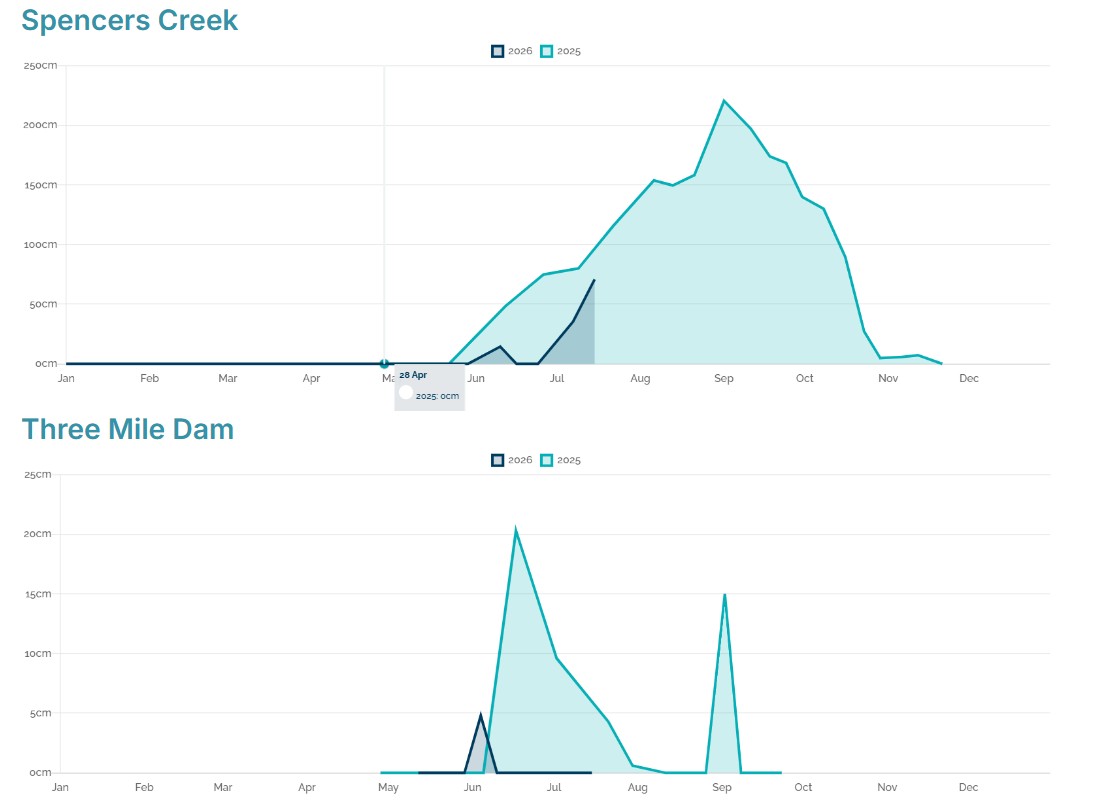
Image: Snow depth to date in 2026 (dark blue) versus 2025 (light blue) at Spencers Creek (top) and Three Mile Dam (bottom). Source: Snowy Hydro.
While Three Mile Dam recorded a depth of 4.8 cm after the first moderate snowfall of the ski season just before the King’s Birthday long weekend, that snow soon melted.
After virtually no snowfalls occurred during the last three weeks of June across all elevations in the mainland high country, two snowy systems in the first half of July brought snowfalls of around 40 cm and then 30 cm to the upper slopes of the higher ski resorts.
But those two snow events delivered almost nothing down low.
While a few centimetres of snow fell to low elevations on Sunday morning in a brief blast of frigid polar air, the snow soon vanished as slightly warmer air moved in, with snowfalls turning to rain showers below about 1800 metres.
How are conditions at the ski resorts now?
As you’d expect with a 70-centimetre snowpack up high after last weekend’s snowfalls, more lifts have started to open across the mountains.
In New South Wales, Perisher has 27 of its 45 lifts open, Thredbo has 11 of 15, Charlotte Pass has 4 of 5, while Selwyn has just 2 of 7 – both of them beginner lifts.
In Victoria, Falls Creek has 11 of its 15 lifts open, Mt Buller has 7 of 19, Mt Hotham has 7 of 14, while Mt Baw Baw has one basic beginner lift open with almost no natural snow.
It’s no coincidence that Baw Baw and Selwyn are both currently unable to open terrain away from the snowmaking zones, as they are the two lowest mainland ski resorts – meaning they have seen a lot more rain than snow of late.
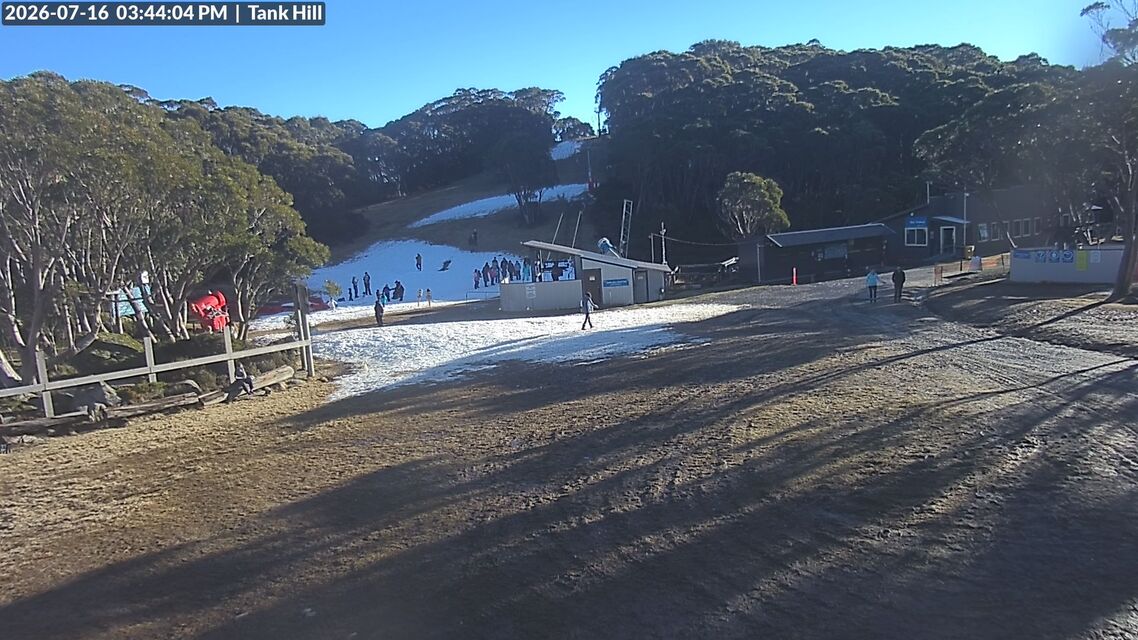
Image: The limited snow play and snow sports action is on the snowmaking snow at Mt Baw Baw, Victoria. Source: ski.com.au.
Meanwhile in Tasmania, the state’s only commercial ski area Ben Lomond has 2 of 7 lifts open.
A slick, icy playing surface
One issue with the snow at present is that the surface is very icy, due to the current spell of warmish days with maximums a few degrees above zero which have been punctuated by cold nights.
The snowpack has set so firm in some places that it has created the shiny effect visible in the foreground in the image of Thredbo below.
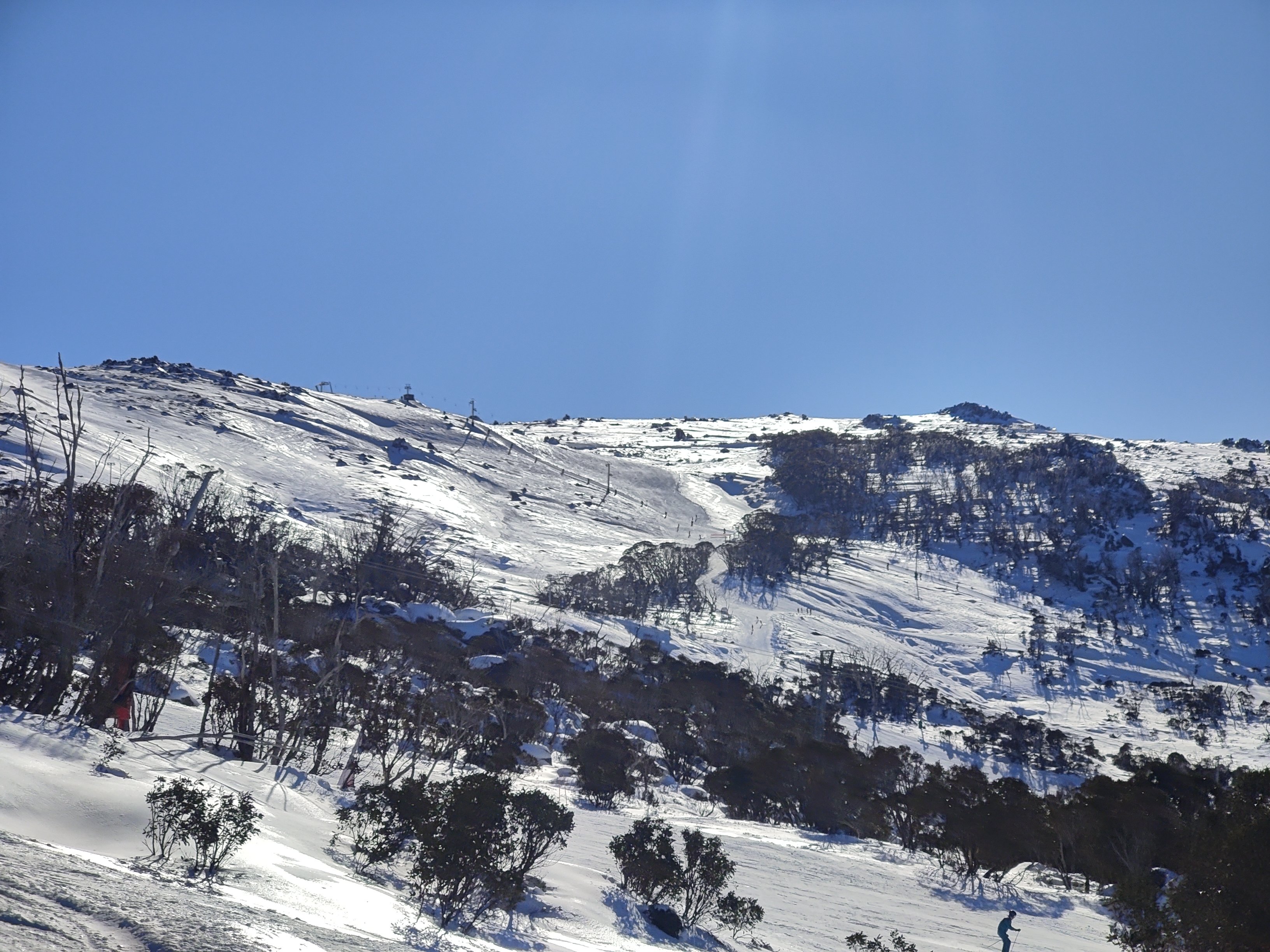
Image: Sunny skies above the upper slopes of Thredbo on Wednesday, July 15, 2026. Source: Rusty J.
So conditions are not ideal at present, although the good news is that there’s a decent base up high upon which fresh snow can accumulate during the next snowfall.
Are significant snowfalls on the horizon?
Snow-bearing cold fronts appear likely to be steered south of Australia during the next week to 10 days. The main positive for snow lovers is that conditions should be cold enough most nights for snowmaking.
Early indications are that the pattern could break by the last few days of July, with a potential snowy system pushing through. Please check the Weatherzone snow page for the latest forecasts, live snow cam images and more.