
Heat in Western Australia could nudge 50°C
The mercury in Perth will rise towards 40°C this Tuesday, while Western Australia’s Pilbara region and some adjacent areas will hit the high 40s, with the potential for a 50-degree day.
The extreme midweek heat is part of an ongoing heatwave across a vast area of Western Australia which began last week. Already, around half the state’s 14 official BoM forecast districts have endured heatwave conditions.
While maximums in Perth will be hot but not extreme with expected highs of 39°C, 38°C and 37°C on Tuesday, Wednesday and Thursday respectively (the January record is 44.4°C), temperatures will rise rapidly as you head north.
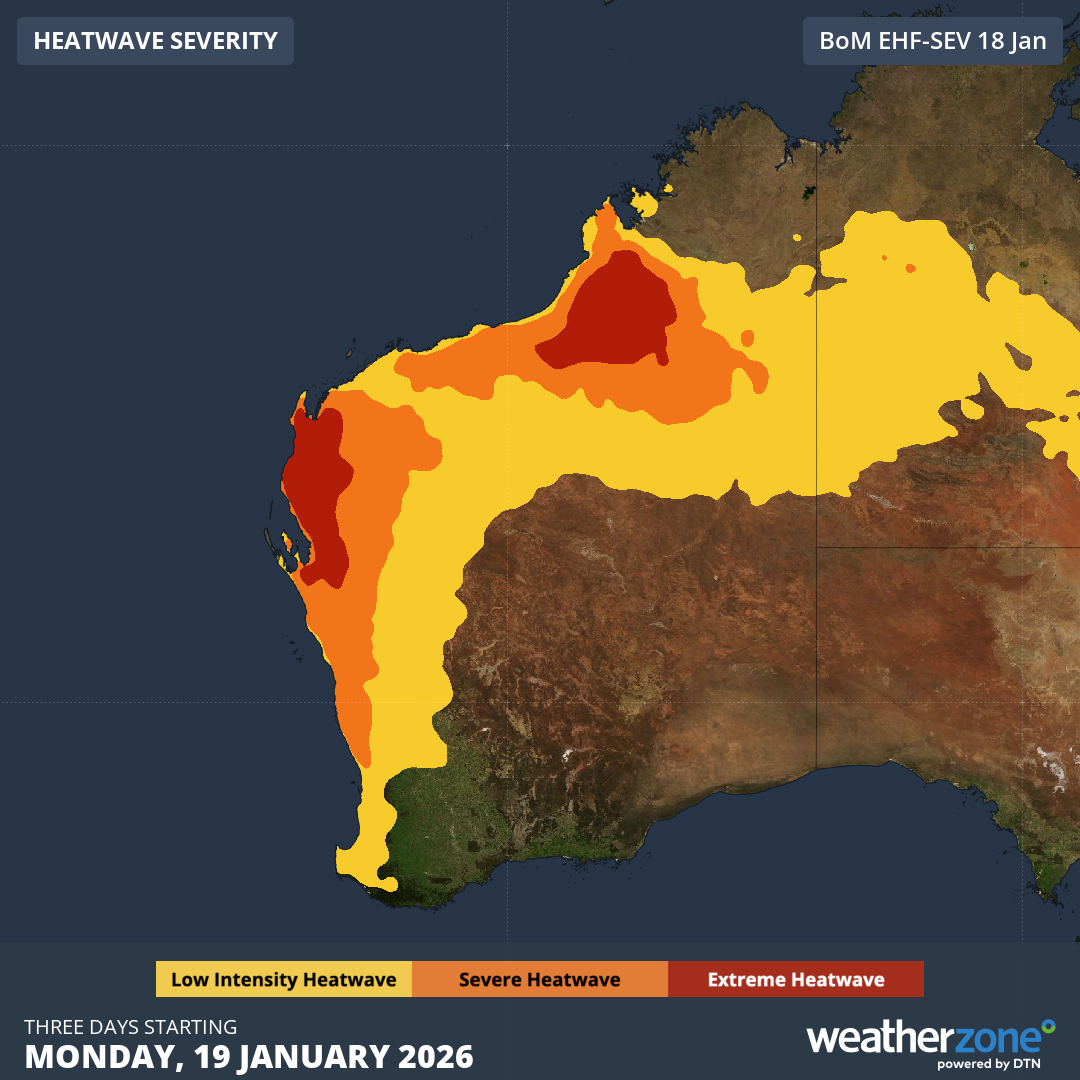
Image: Heatwave map for Western Australia for the three days from this Monday, January 19, 2026. The BoM defines a heatwave as "unusually hot maximum and minimum temperatures over 3 days compared to the local climate and past weather.”
As you can see on the map above, heatwave conditions extend from the southern Kimberley region all the way down to the South West forecast district. The Northern Interior and Southern Interior forecast districts are also affected.
The red zones are areas with an extreme heatwave warning – the highest level of alert. The southern red zone is located in the Gascoyne region. The northern red zone is located near the boundaries of the Pilbara, Kimberly and Northern Interior forecast districts.
What’s causing this heatwave?
Over the past week or so, a relatively consistent pattern of high pressure systems centred over the Southern Ocean have enabled an easterly circulation of winds across Australia south of the tropics (air circulates anti-clockwise around highs).
These winds have brought consistent moisture to much of the east coast. They have then dried and heated rapidly as they crossed the interior of the continent, pushing hot air westwards.
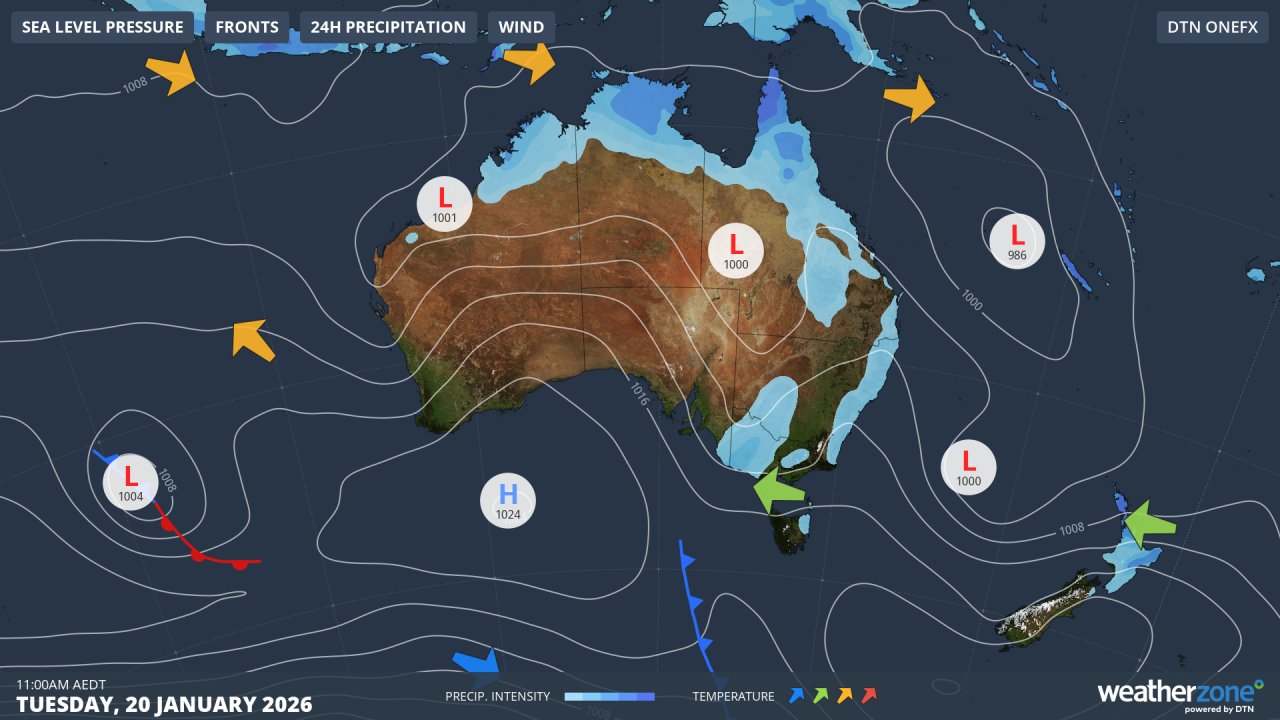
Image: Synoptic chart for Australia on January 20, 2026.
According to Weatherzone meteorologist Joel Pippard, the persistent monsoon trough across northern Australia has also played a role in warming the atmosphere south of the tropics.
"The monsoon is causing convection [rising air] in the tropics. After rainfall in tropical regions, this air is transported out over areas of high pressure, where it slowly makes its way to the surface and warms up again," Pippard explains.
What would it take for the temperature to reach 50°C?
Essentially, it’s a battle between land breezes and sea breezes.
On January 13, 2022, the coastal WA town of Onslow (in the Pilbara) reached 50.7°C at 2:26pm, which equalled Australia’s all-time high temperature record (jointly held by Oodnadatta, SA).
Winds were out of the east at the time of the heat record, which meant they were land breezes. An hour later, a westerly sea breeze kicked in, dropping the mercury to 42°C by 5pm. Then the land breeze took hold again, and the mercury surged back up to around 47°C within half an hour.
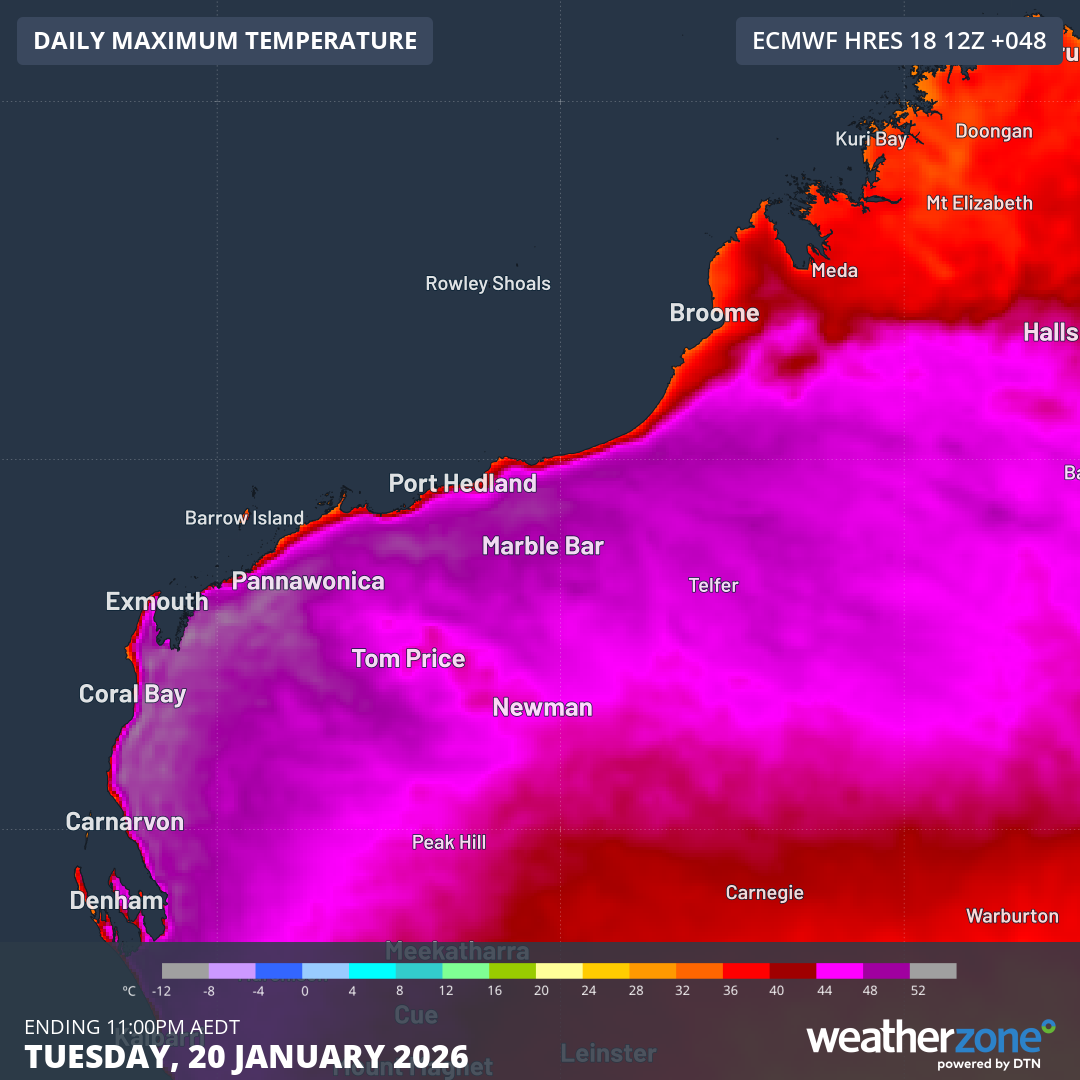
Image: Predicted maximum temperatures for the Pilbara and nearby WA forecast districts on Tuesday, January 20, 2026, according to the ECMWF model.
If you note the thin red line along the coast in the map above, you’ll see that areas immediately inland are forecast to get much hotter.
For example, Onslow’s forecast maximum is "only" 40°C for Tuesday, while the inland mining towns of Marble Bar and Paraburdoo are both forecast to reach 47°C.
Marble Bar reached 47.2°C on that scorching day of January 13, 2022, when Onslow briefly hit 50.7°C. Should the land breeze prove more robust than the sea breeze this Tuesday, there’s the chance that Onslow will get significantly hotter than its forecast maximum of 40°C.
Australia has not seen a 50-degree day since 2022. The hottest recorded temperature to date this year in Australia was 49°C at Onslow on January 7. We’ll keep you posted.
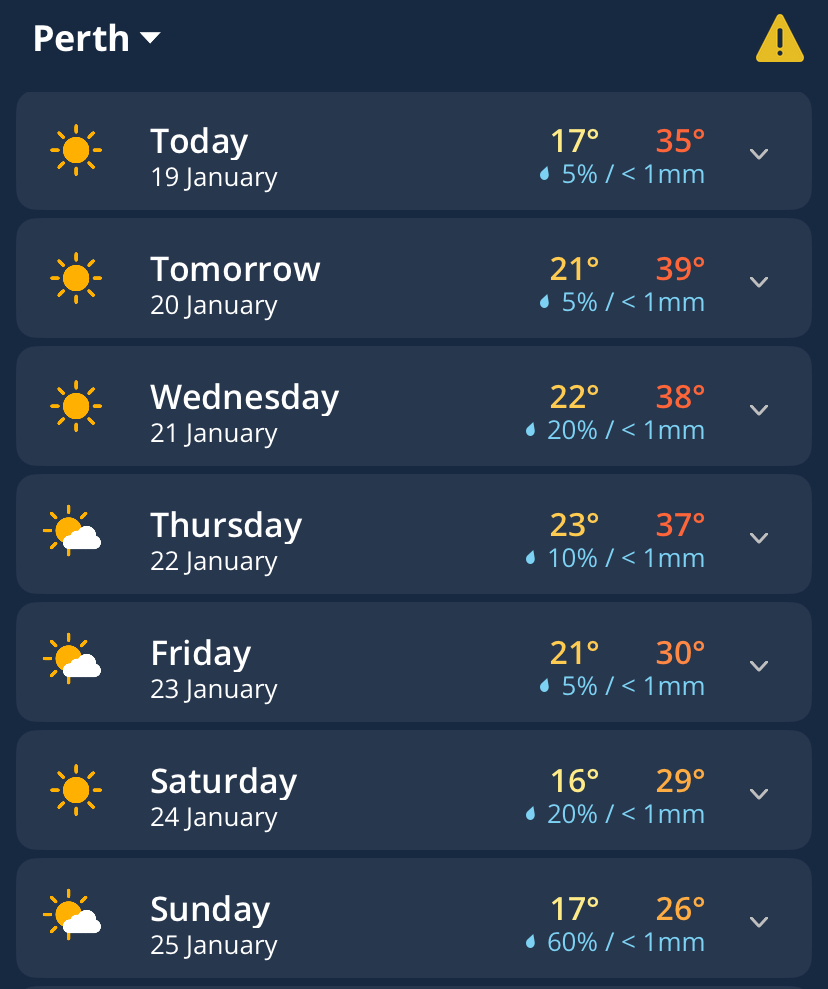
Image: Daily forecasts for Perth on the Weatherzone app.