
Wildfire smoke lingering in Great Lakes, Mid-Atlantic and Northeast
Growing wildfires in Ontario and the Boundary Waters of Minnesota are creating thick smoke for parts of the Midwest, Mid-Atlantic, and Northeast, which could remain a lingering problem in the coming weeks.
Massive wildfires across western Ontario and the Boundary Waters Canoe Area in Minnesota continue to burn and grow this week. Heavy smoke has been filling the skies over the last couple of days, with smoke spreading through the Great Lakes into the Northeast and Mid-Atlantic states on Wednesday, July 15.
The smoke is occurring on the edge of a ‘heat dome’ that is lying across the northern U.S., causing extreme hazards due to heat. Now, the increasing smoke and particulate matter may lead to other health risks for vulnerable groups over the next several days.
Smoke could linger for weeks
Upper-level winds are currently out of the northwest, which is pushing smoke southeast across the Great Lakes and into portions of the Mid-Atlantic and Northeast. These winds will largely be in place through the end of July. A quick response by first responders and firefighters could help to limit the duration, but multiple days of smoky skies are in the forecast.
Air quality alerts have been raised as the smoke spreads, with recent images and webcams on social media from northeast Minnesota to the Mackinac Bridge in Michigan showing how thick this smoke can be when it stays near the surface.
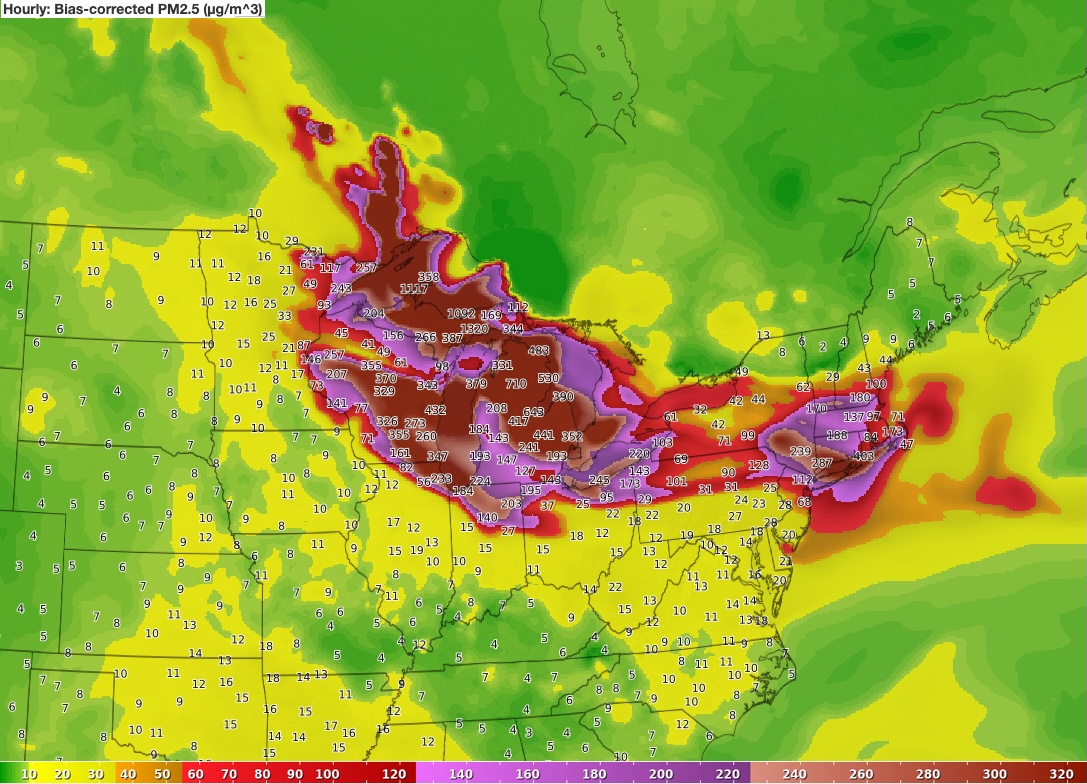
Image: Air quality forecast for Thursday, July 16, 2026. Source: NOAA.
Besides making for some smoky skies and beautiful sunsets, wildfire smoke is dangerous for vulnerable groups like asthmatics and the elderly. Those sensitive to wildfire smoke should continue to watch the air quality forecast from the U.S. EPA.
Periods of respite from the smoke
Some changes in the weather could help to break up the consistency of the smoke and make conditions less hazardous in the coming weeks.
One such weather system will move through these areas on Friday and Saturday, July 17-18. In addition to bringing rainfall that could help fight the fires, rainfall can also help to clear the air and disperse the smoke some.
Another system moving through on Monday, July 20, could do something similar. Between systems, changing winds, however slightly, may also break up the thick smoke plumes, dispersing them to some degree, and offering some relief.
However, if these fires are not put out quickly, we could see this becoming a long-duration event lasting beyond this weekend for those around the Great Lakes and possibly into the Northeast and Mid-Atlantic, particularly if the prevailing upper-level wind pattern remains out of the northwest through the end of July.