
Why has Kati Thanda-Lake Eyre turned pink?
The vast waters in Kati Thanda-Lake Eyre have turned pink, offering a rare spectacle that can be seen from space.
The lake started filling with water back in May this year following heavy rain over Queensland in late summer and autumn. March was a particularly wet month for the Lake Eyre Basin, with record-breaking rain falling in parts of western Qld.
Kati Thanda-Lake Eyre is an ephemeral lake, meaning it spends much of its time empty and only fills following heavy rain in the Lake Eyre Basin, an area spanning around 1.2 million square kilometres into parts of four Australian states and territories.
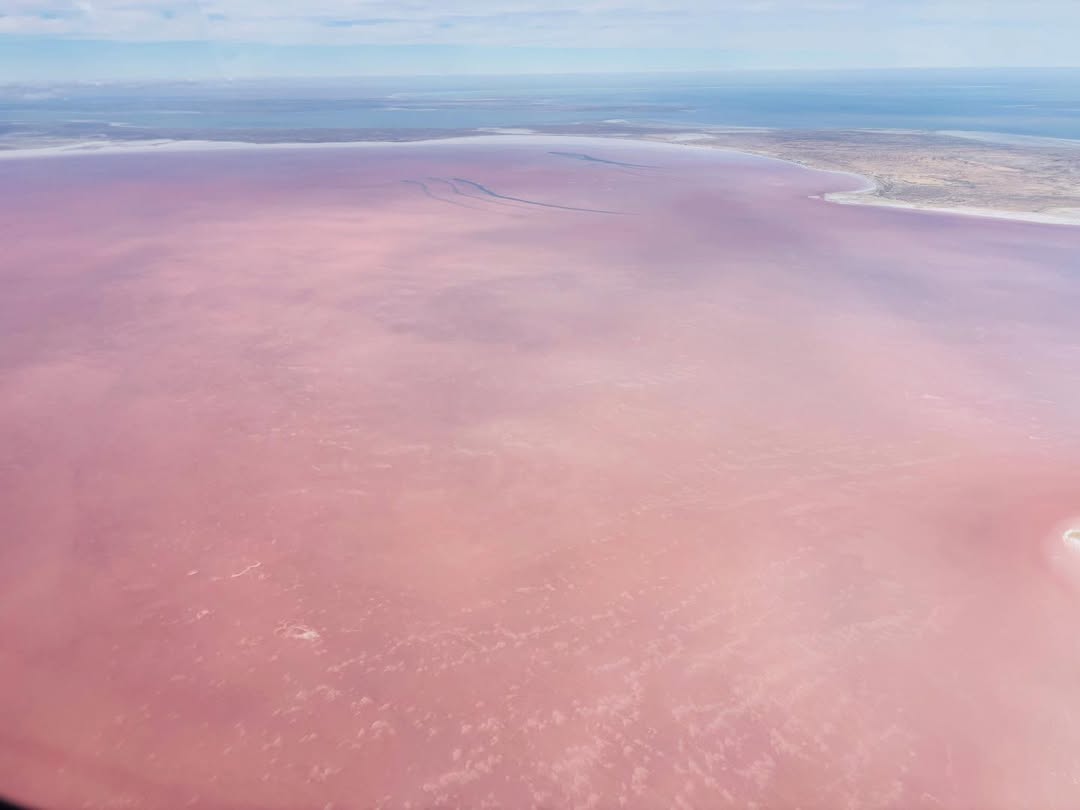
Image: Pink water in Kati Thanda-Lake Eyre in late-November 2025. Source: @chintachick / Instagram
The heavy rain that fell earlier this year injected a huge amount of water into the lake. As the lake is endorheic, meaning it is a drainage basin that has no outlet, this water has been slowly evaporating over the past six to seven months.
Water evaporating from endorheic lakes like Kati Thanda-Lake Eyre cause the water’s salinity to increase. This heightened brine concentration causes and increase in certain types of bacteria and algae, which causes the colour of the water to appear pink.
The large size of Kati Thanda-Lake Eyre has made its pink waters visible in satellite images captured from the edge of space, including the Himawari-9 satellite that sits around 36,000 km above the Earth’s surface.
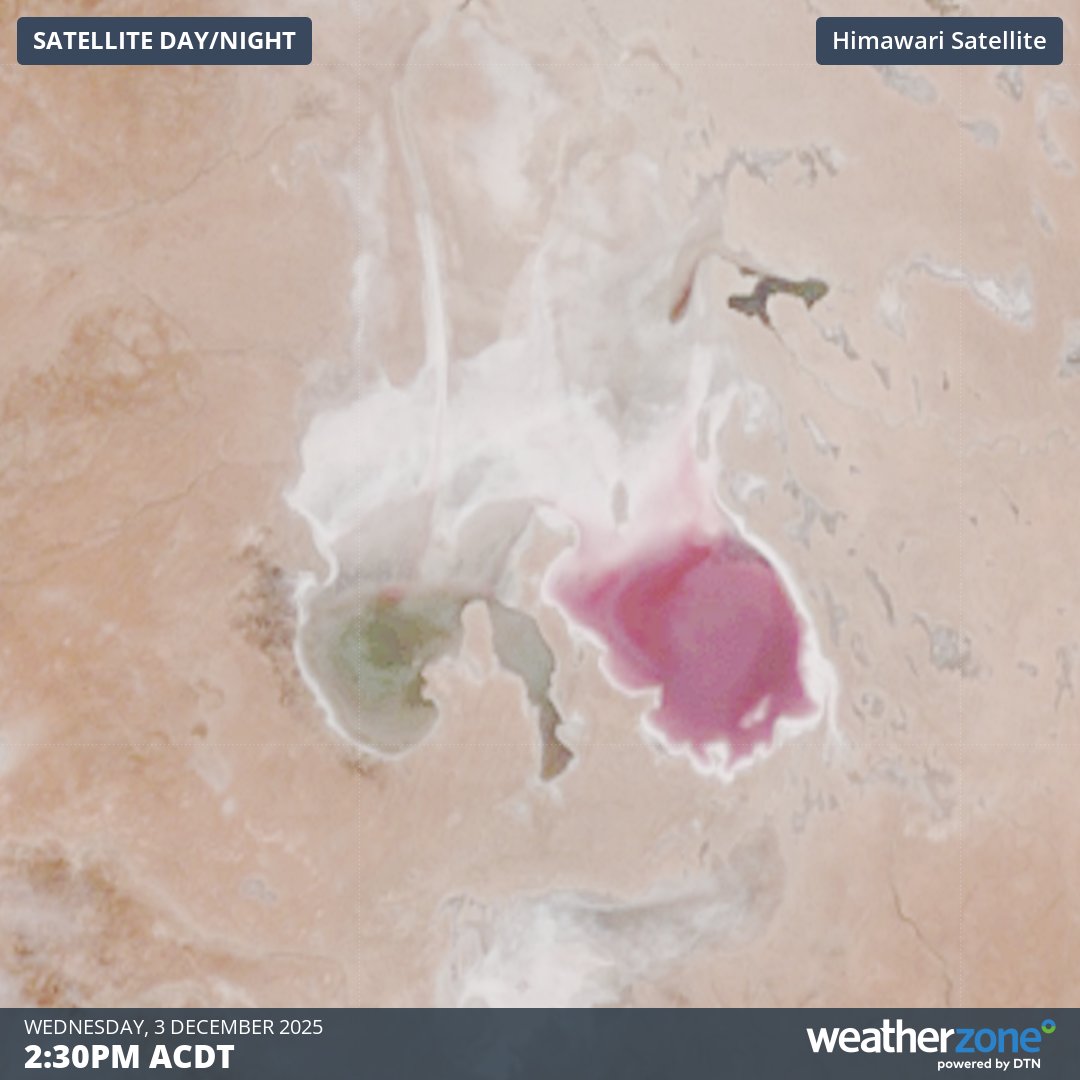
Image: Pink water in Kati Thanda-Lake Eyre on Wednesday, seen by the Himawari-9 satellite. Source: Weatherzone.