
Wet week ahead for multiple Australian states
Rain and thunderstorms will spread over parts of the Australian outback this week, affecting at least five states and territories. It’s also going to be a wet week for the country’s east coast.
High pressure driving moisture over Australia
A large high pressure system moving slowly over Tasmania and the Tasman Sea this week will cause moisture-laden easterly winds to flow across eastern, northern and central Australia.
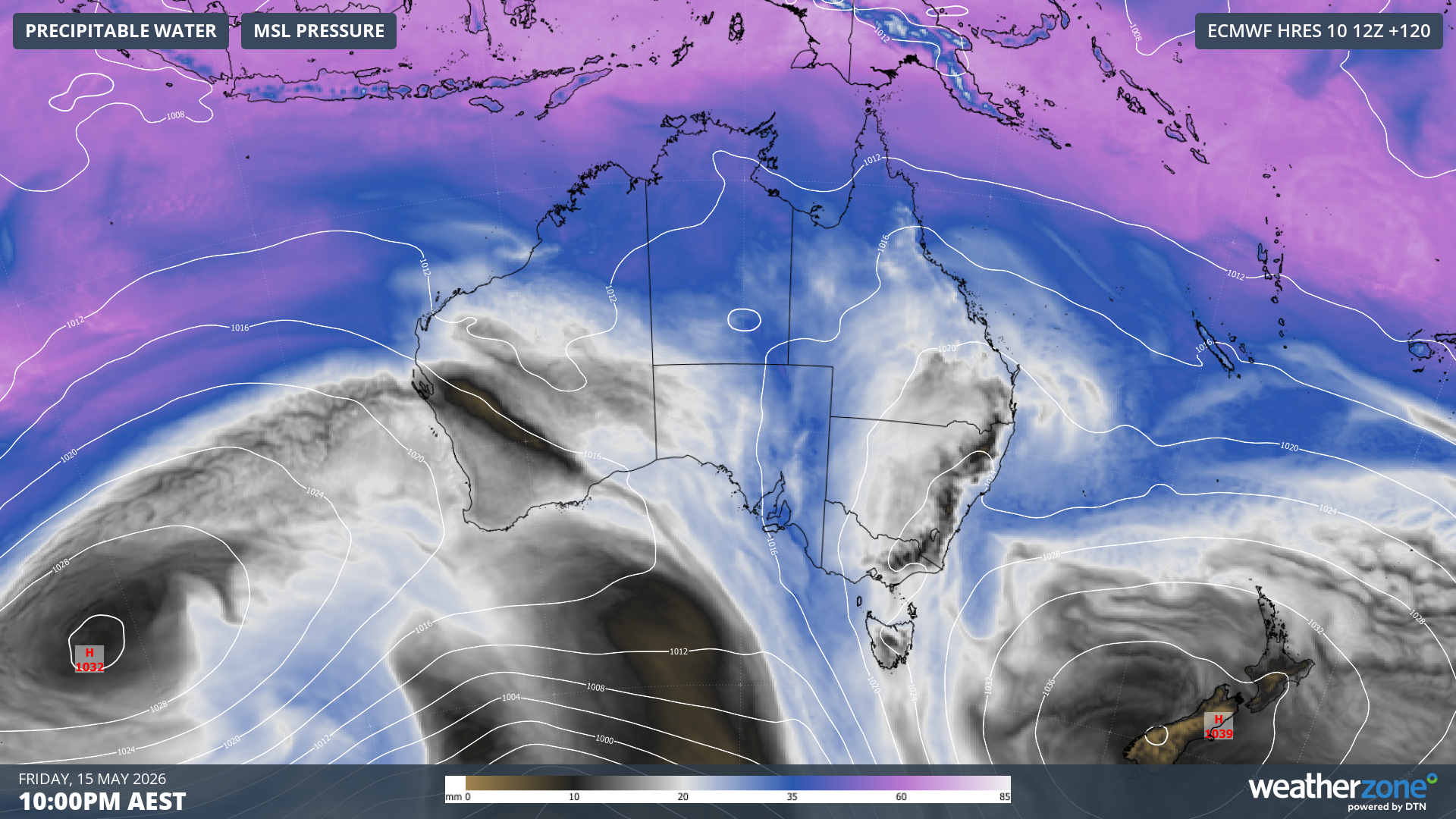
Image: Modelled precipitable water and mean sea level pressure, showing moisture-laden air over central and northern Australia on Friday, May 15, 2026. Source: Weatherzone.
These persistent and moist easterly winds will generate showers each day this week along parts of the country’s east coast, extending from southern New South Wales up to northern Queensland.
Further inland, tropical moisture will feed into a slow-moving low pressure trough to cause showers and thunderstorms over a broad area of northern, central and southeastern Australia.
The map below shows how much rain one computer model is predicting this week, with rain expected to fall in part of every state and territory during the next seven days.
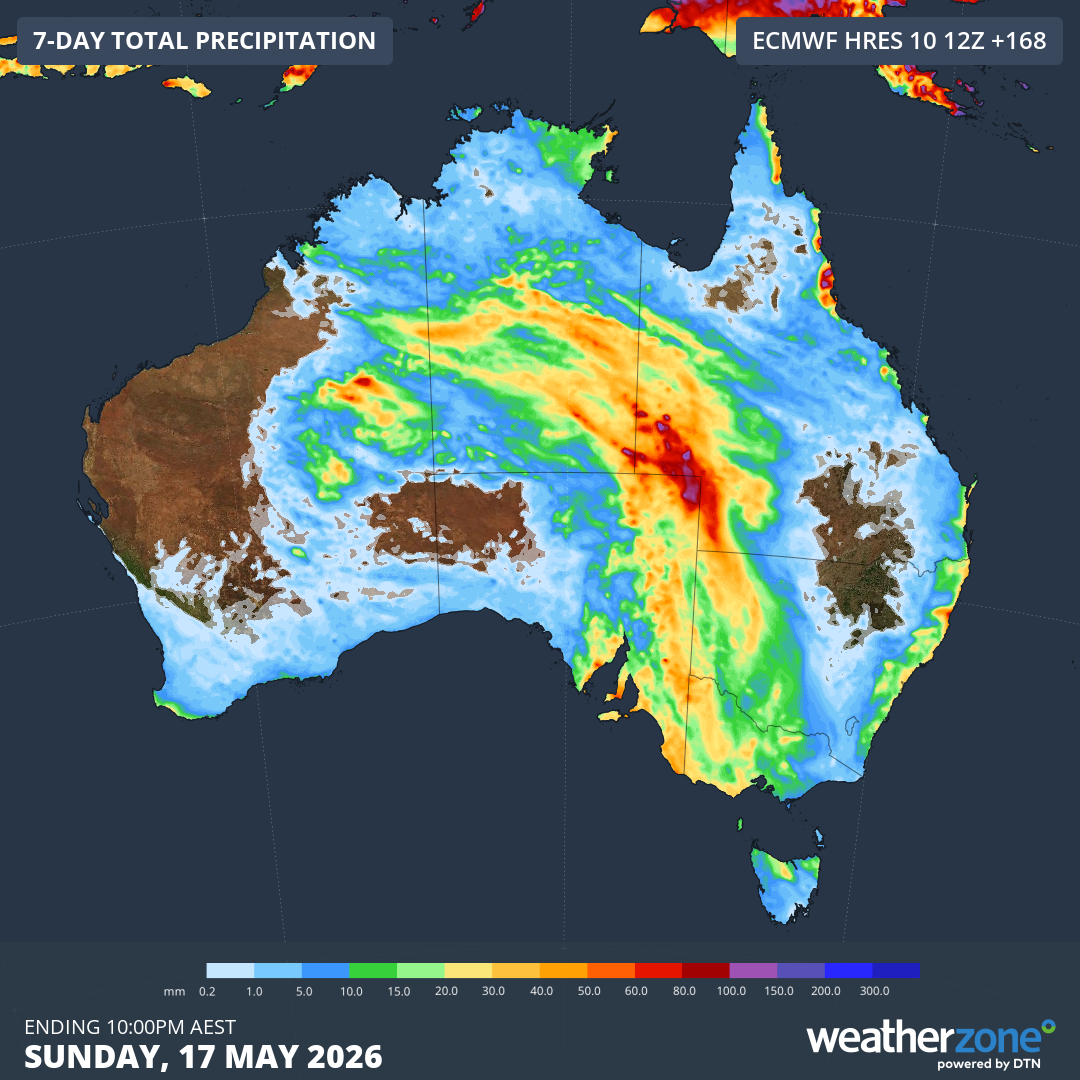
Image: Forecast accumulated rain this week, according to the ECMWF model. Source: Weatherzone.
Heavy inland rain
This week’s outback showers and storms will mainly affect parts of Queensland, the Northern Territory and South Australia between Monday and Friday, with stormy weather possibly extending towards the south of SA, including Adelaide, from Wednesday onwards.
While rain and thunderstorm activity will generally be hit and miss for much of this week, a more substantial rainband could develop from this weekend into early next week. Some computer models suggest that this rainband could soak a broad area of central and southeastern Australia from Saturday onwards.
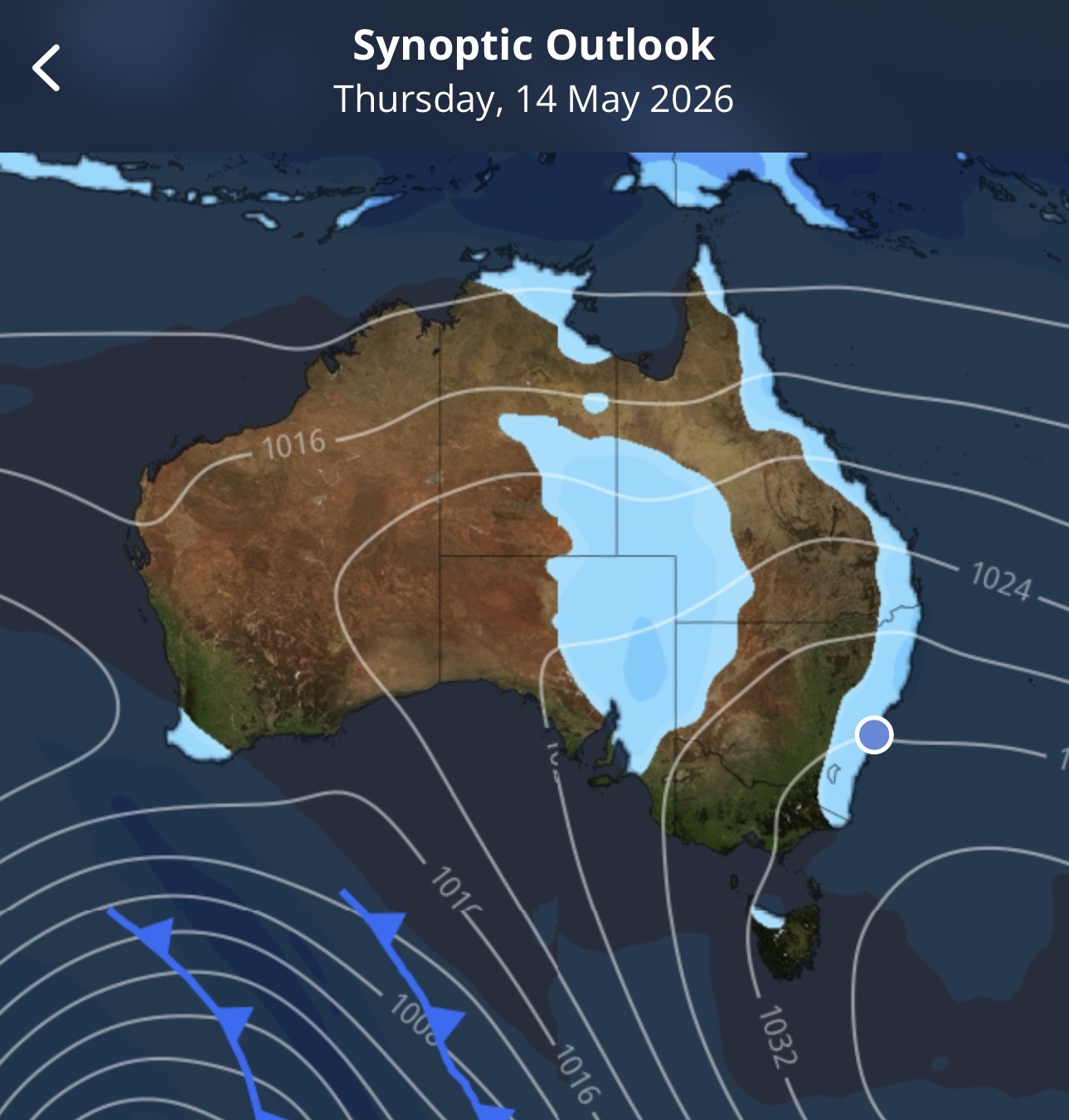
Image: Synoptic outlook on the Weatherzone app for Australia on Thursday, May 14, 2026. Source: Weatherzone.
Some areas of central Australia should see accumulated falls of around 30 to 60 mm this week, with potential for isolated areas of more than 100 mm. This much rain can cause flooding, particularly in places that still have swollen rivers from recent rainfall.
Anyone planning on travelling through central Australia during the next couple of weeks should check the latest forecast, weather warnings and road closures for the most up to date information.