
WA hits 49°C as heatwave escalates fire danger in multiple states
Western Australia has endured blisteringly hot temperatures this week, with the state setting a new high minimum temperature record on Wednesday morning before getting close to 50°C in the afternoon.
Record-breaking heat in WA
WA’s Pilbara district is no stranger to intense heat at this time of year. The average maximum temperature at Marble Bar during January is around 41°C, while Karratha’s average January minimum temperature is about 27°C.
But this week has been remarkably hot in the Pilbara and records have been broken.
Paraburdoo, located roughly 200 km west of Newman, registered a minimum temperature of 35.8°C on the morning of Wednesday, January 7. This was the highest minimum temperature ever reliably recorded in WA, beating the previous record of 35.5°C at Wittenoom on January 21, 2003. It was also the 5th highest minimum temperature record in Australia.
This record-breaking minimum temperature was then followed by a day of extreme heat as the mercury soared as high as 49°C at Onslow Airport.
Hottest place in the world
While Onslow’s 49°C was not a record, it was the highest temperature anywhere in the world on January 7.
Impressively, Onslow was more than 100°C warmer the coldest place in the world on January 7, which was -53.5°C in the Republic of Sakha (Yakutia), Russia. That means the temperature differential between Australia and Russia on January 7 was a whopping 102.5°C.
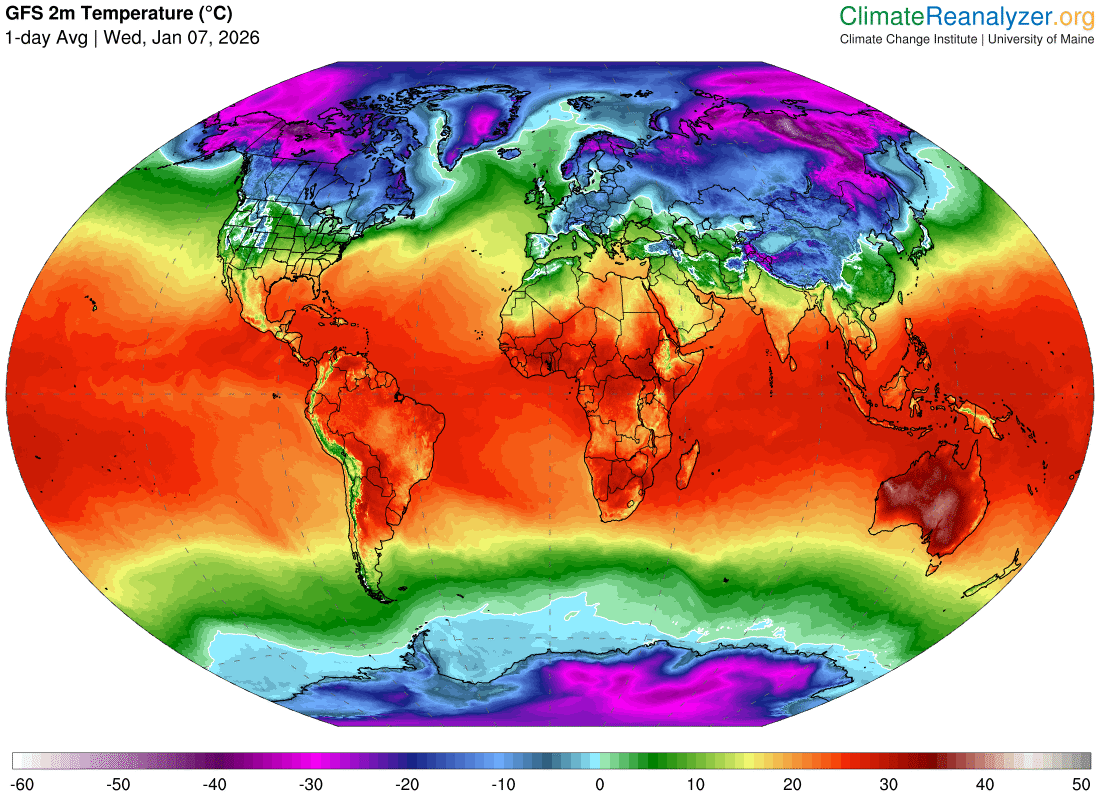
Image: Modelled 1-day average temperature on Wednesday, January 7, 2026, showing a huge contrast between Australia and Russia. Source: ClimateReanalyzer.com
Widespread heat continuing over Australia
While WA has seen the highest temperatures in Australia this week, intense heat has been widespread as the country endures a nation-wide heatwave.
Temperatures exceeded 43°C in parts of WA, NSW, SA, the NT, Vic and Qld on Wednesday, January 7. For some places, it was the hottest day in around 6 to 7 years. This included Melbourne, which reached 41.0°C, its highest temperature since 2020.
This severe to extreme heatwave will continue to affect a broad area of Australia in the coming days as hot air lingers over the country. Unfortunately, this heat will contribute to extreme and catastrophic fire danger ratings in parts of Vic, SA, NSW and the ACT between Thursday and Saturday.
The combination of the heatwave and elevated fire weather will cause conditions that could threaten people's lives and impact infrastructure, including transport networks and electricity supply.
Be sure to check the latest forecasts and warnings in your area over the next few days and monitor fire activity in your state or territory.
Fire information can be found at the following websites:
- Vic: https://www.cfa.vic.gov.au/
- SA: https://www.cfs.sa.gov.au/home/
- NSW: https://www.rfs.nsw.gov.au/
- ACT: https://esa.act.gov.au/fire-rescue
The Australian Red Cross has the following advice for staying safe during a heatwave:
- Stay inside and keep out of the heat as much as possible. Plan to do most of your activities early or late in the day to avoid being outside during the hottest hours.
- Avoid sport and heavy exercise during peak hours of the day.
- Drink plenty of fluids to stay hydrated, even if you don’t feel thirsty.
- Keep your home cool by using external shade cloths or blinds to shield the inside of the house from direct sunlight.
- Where possible use a combination of air conditioning and fans to keep certain rooms in the house cool. Electric fans can be an effective method of cooling if air conditioning is not available.
- If not using air conditioning, open windows during the cooler parts of the day and allow ventilation between rooms.
- Take cool showers or baths, splash yourself with cold water, or use a cool damp cloth to cool down.
- If it's too hot at home, go to an air-conditioned shopping centre, community centre, library or your local swimming pool.
- Avoid direct exposure to the sun where possible and protect yourself with appropriate clothing (loose-fitting, lightweight and light-coloured).
- Do not leave children or animals in parked vehicles.
- Keep in touch with friends, neighbours and relatives, particularly if they’re unwell or isolated.