
Travelling north to meet the cold waters
For Sydney siders, a road trip north will generally be accompanied by the expectation for warmer waters feeding off the East Australia Current.
I had this similar expectation on a recent camping trip, ahead of the school holiday madness, hoping to score some empty waves and “balmy waters”. Leaving Sydney’s toasty 23-degree waters (relatively high for this time of year – with peak sea surface temperatures only expected in February), a few hours on the road and a right turn off the Pacific Highway, I was in my boardies and running down to the beach. The ocean sent chills up my spine as I stepped in and was brought back to late-Autumn or mid-Spring instantly.
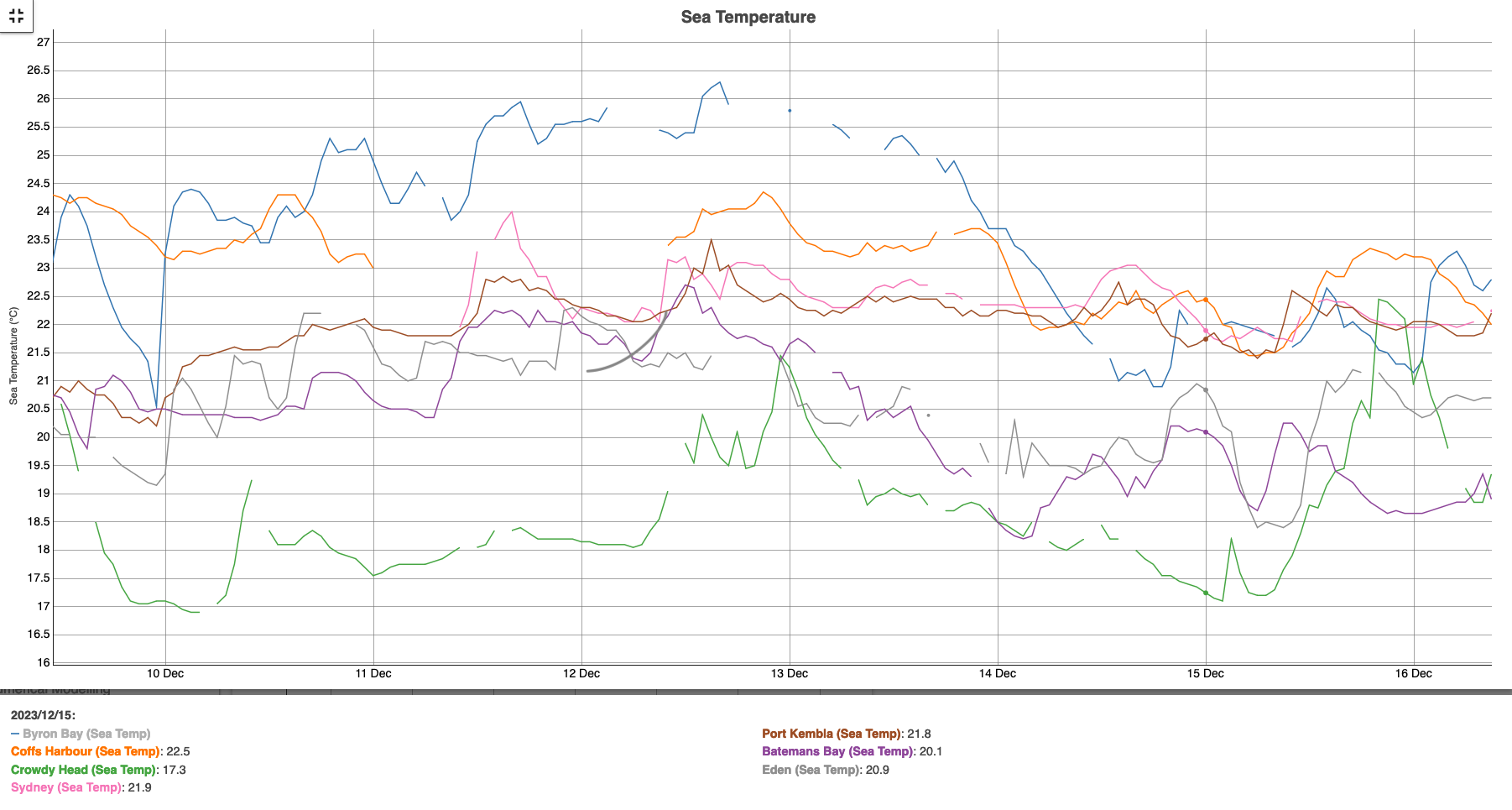
Figure 1: Sea surface temperature measurements over the NSW coastline over the past week showing Sydney (pink) trending between 21 and 23 degrees, while Crowdy Head (green), on the Mid North Coast, struggled to get much above 20 degrees. (Manly Hydraulics Laboratory)
Cold waters from deeper in the ocean had been upwelling all over the Mid North Coast between South West Rocks and Newcastle, a phenomenon typical for this time of year, but un-noticeable in Sydney due to a deep pool of warm water caused by a large ocean eddy moving southward. The Sea Surface Temperature Snapshot below (figure 2) shows this large difference in temperatures between Sydney (in yellow-orange) and the Mid North Coast (in deep blues).
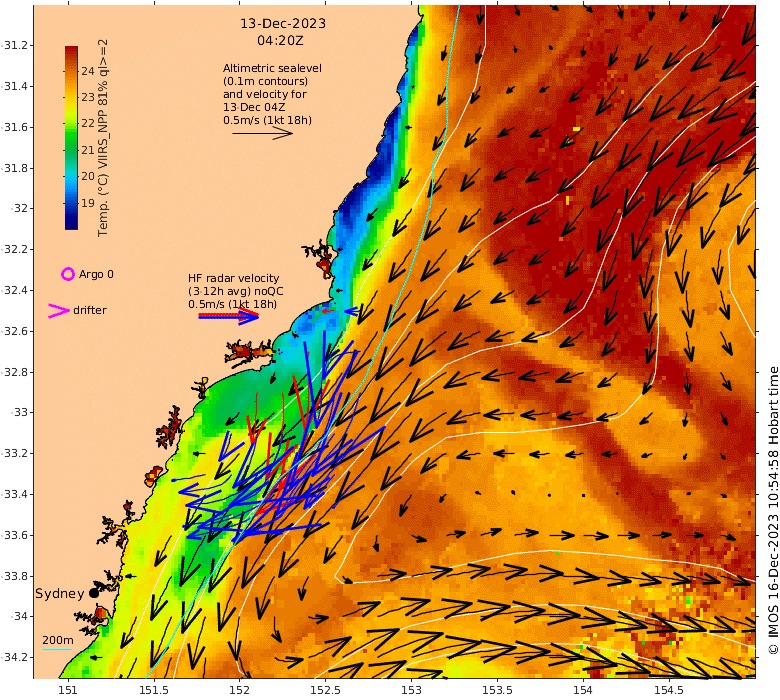
Figure 2: Sea Surface Temperatures (SST) off the central and mid north coasts of NSW, showing cold sea surface temperatures near the coast between South West Rocks and the Hunter Bight on December 13th. (IMOS)
Upwelling of cold water from the ocean depths (as seen in figure 3 below) carries nutrients to the surface, feeding into the bottom of the food chain. This bloom of nutrients caused the water to be littered with algae, giving the ocean a green tint and an ominous feeling as I paddled out into the surf. This bloom of nutrients is, however, crucial in keeping the ecosystem balanced and fed, so while balmy tropical waters are a joy for holiday goers, the local dolphins were appreciating the well-stocked buffet on offer.
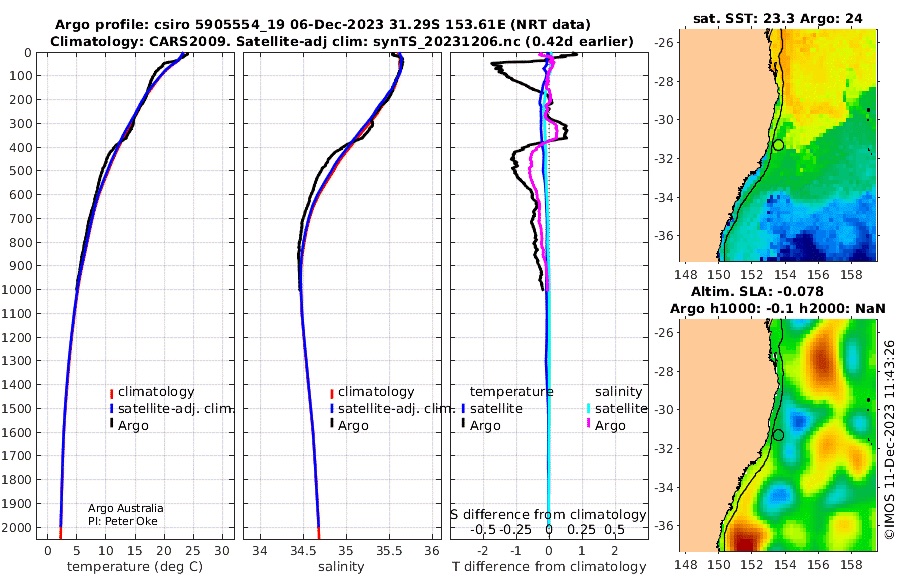
Figure 3: An ARGO float located off the NSW Mid North Coast on December 6th measuring temperature and salinity between the sea surface and a depth of 2km. (IMOS)
In the case of Sydney, just a few hundred kilometres south, the deep extent of warm, nutrient-deprived water, meant that any upwelling events over the past few months have simply introduced further warm, and nutrient weak waters into the coastal areas.
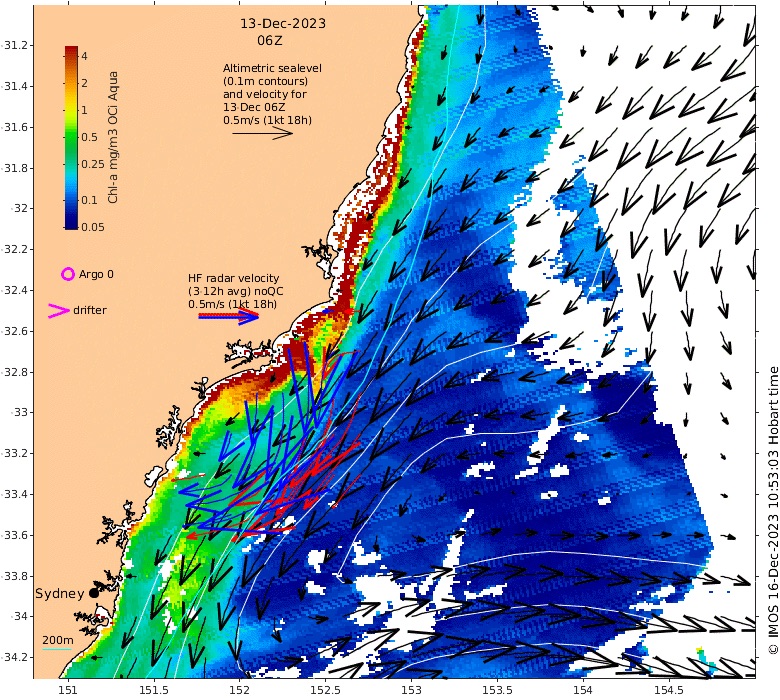
Figure 4: Chlorophyll-a (a nutrient) ocean measurements off the central and mid north coasts of NSW, showing cold high concentrations of nutrients near the coast between South West Rocks and the Hunter Bight on December 13th. (IMOS)
Luckily for my wave hunt, I had packed a thicker wetsuit deep in my boardbag that kept me in a much more comfortable way than the few other surfers who paddled out in just swimwear, keeping their go-outs on the short side. So as the holiday period comes into full swing, keep an open mind if travels to the coast are on the cards, as ocean temperatures will naturally lag behind the air temperature, and pack some extra water layers somewhere in the car.