
The peninsula that rain forgot
Take a look at this two-hour loop of rain crossing South Australia's Yorke Peninsula on Monday afternoon.
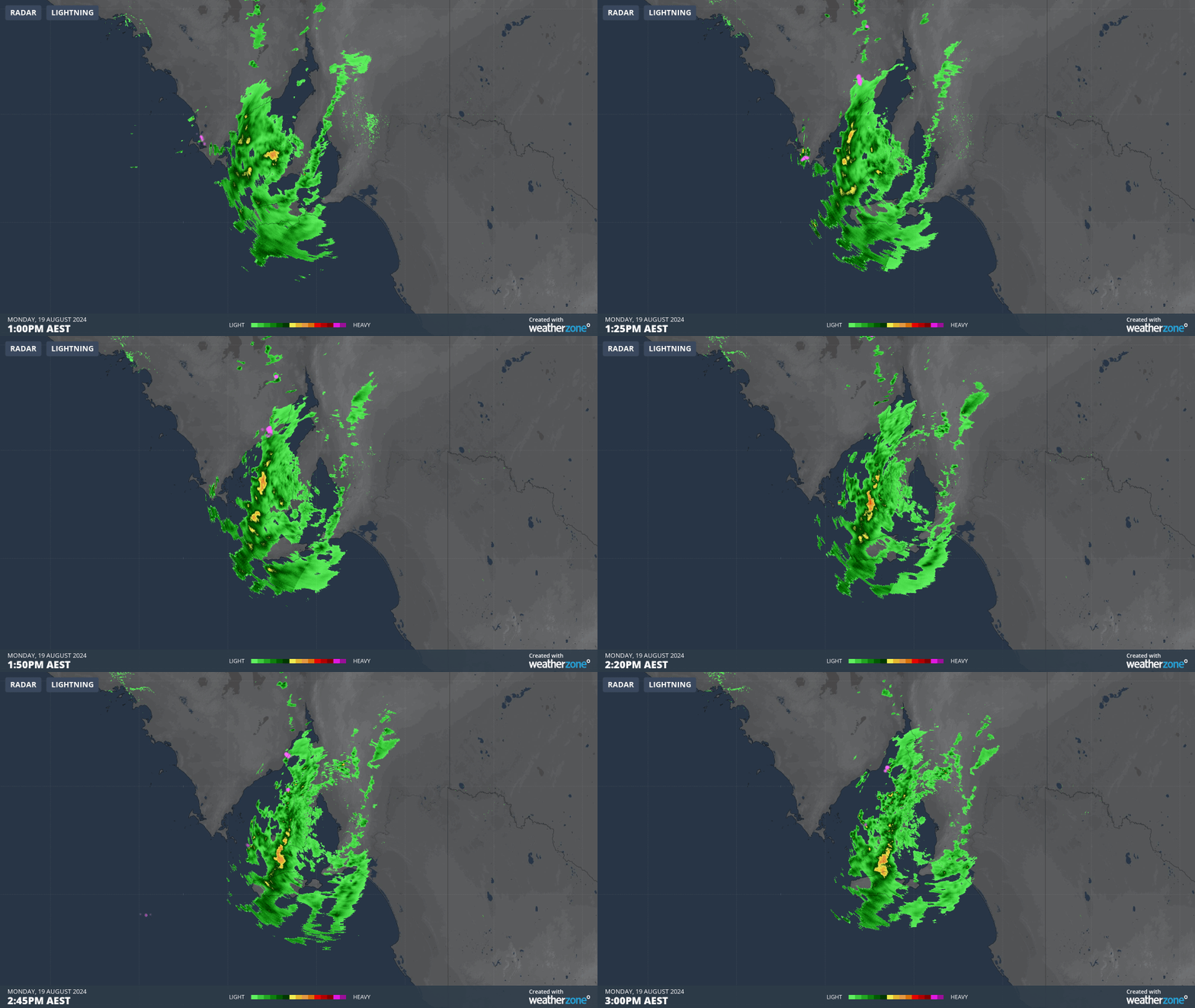
While every part of the peninsula caught at least some rain, the rainband whooshed through quickly, leaving totals of 5 mm or less. This was little more than a tease for a region which has endured an exceptionally dry year to date.
Called "Guuranda" by the original inhabitants, the Narungga people, the Yorke Peninsula is the long "leg" of land west of Adelaide, separated by Gulf St Vincent. To the west is Spencer Gulf.
While the peninsula is wet enough for a range of agriculture, it's a relatively dry place for somewhere this far south where no location is more than about 20 km from the coast.
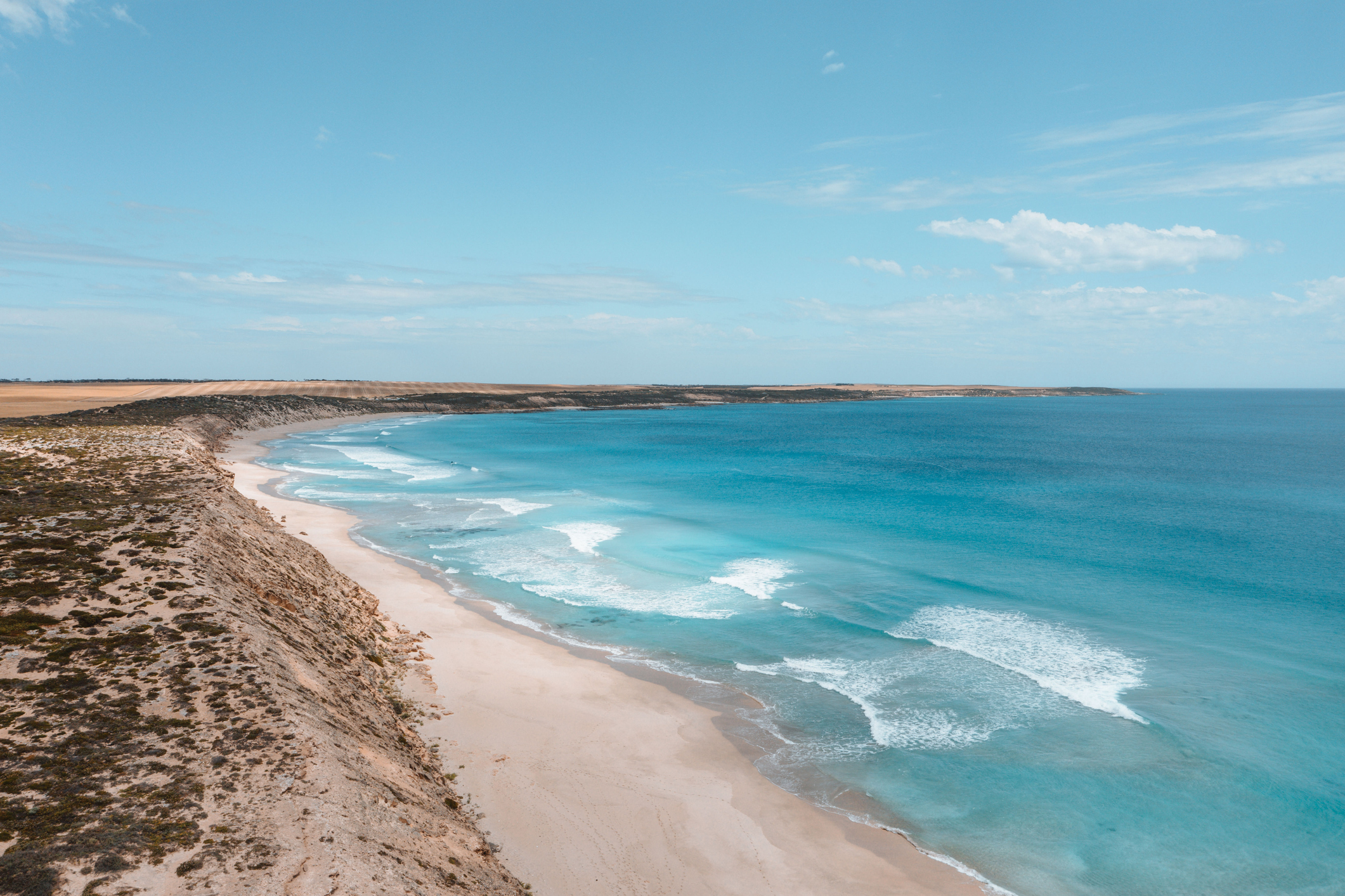
Image: Another dry day on the Yorke Peninsula. Source: iStock.
Indeed, every weather station on the peninsula is drier than Adelaide in terms of annual average rainfall, even though the foot of the Yorke is further south than Adelaide. Here's the annual average rainfall for three selected sites, plus Adelaide:
- Kadina 327 mm: the largest town on the peninsula, situated in its north.
- Stenhouse Bay 457 mm: the southernmost weather station on the Yorke, situated on its southwest tip.
- Edithburg 377 mm: the southernmost town, located at the eastern edge of the tip.
- Adelaide 527 mm: The driest of the Australian capital cities, and wetter than all places on the Yorke Peninsula.
So why is the Yorke Peninsula drier than Adelaide?
There are two main reasons.
- One is because it has colder water to its south than Adelaide does, which means that Southern Ocean frontal systems pick up slightly less moisture than they do when approaching Adelaide. The gardens of Adelaide can thank Gulf St Vincent for that.
- The second reason is that Adelaide picks up slightly more rain from occasional moist easterly systems. Such systems tend to arrive in the warmer months, and the climate data shows clearly that Stenhouse Bay is considerably drier than Adelaide in late spring, summer and early autumn.
What about the Yorke Peninsula in 2024?
In short, it has been bone dry. Take a look at this graph for Stenhouse Bay, which is the wettest station on the peninsula on average (as shown in the first set of bullet points higher up).
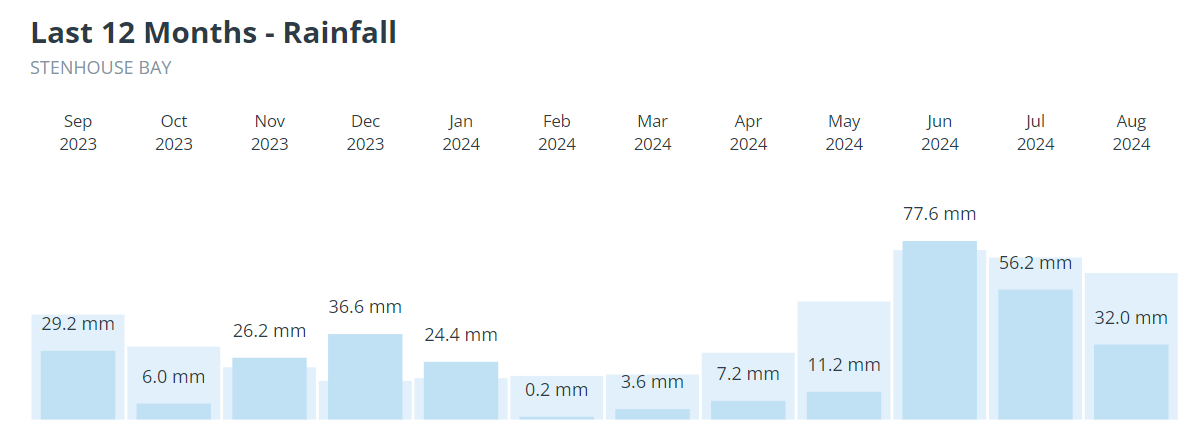
As you can see, only January and June have been wetter than the long-term average to date in 2024, and not by much.
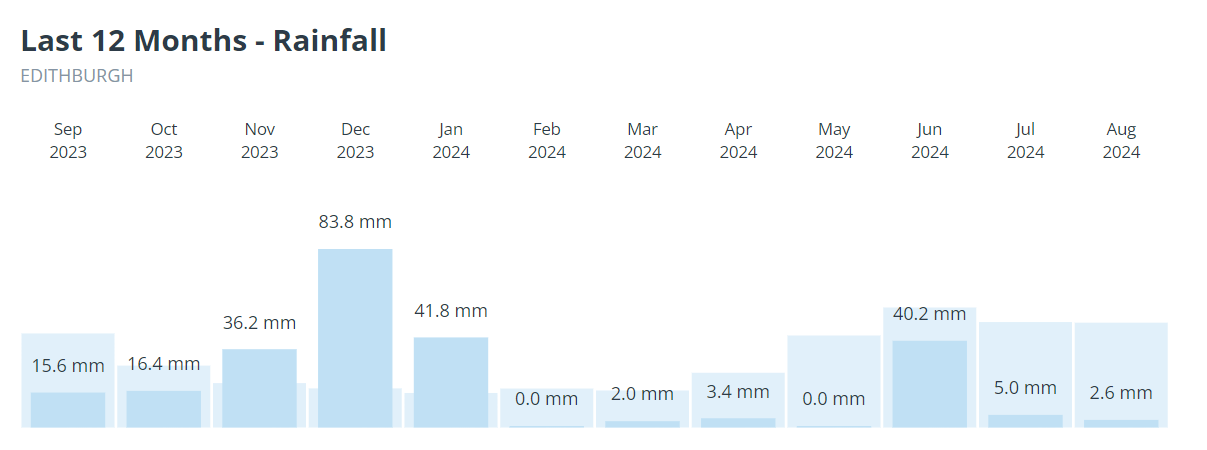
The situation is even worse on the eastern side of the peninsula, although please bear in mind that the stats for Edithburgh (below) do not include any rain that has fallen since Saturday, as the BoM station has recorded no data since then.
In the week ahead, a few millimetres of rain are predicted for much of the peninsula, but daily falls exceeding 5 mm are not on the forecast – and the area really needs a good soaking.
Here's hoping it arrives before the traditional drying out around the middle of spring.