
Snowmaking begins in Australia: but how does it work?
The official 2026 Australian snow season begins on Saturday, June 6, and if natural snow cover is insufficient for skiing and snowboarding on the majority of runs, Australia’s ski resorts will ensure at least some terrain is open thanks to snowmaking.
Snowmaking kicked off this week in some Australian resorts this week, notably Perisher and Thredbo in New South Wales.
At Perisher, the mercury fell to -5.5°C on Thursday morning, the equal-coldest night of 2026 to date (Perisher's average May minimum is -1.2°C). That made for perfect snowmaking conditions on the resort’s signature Front Valley slope.
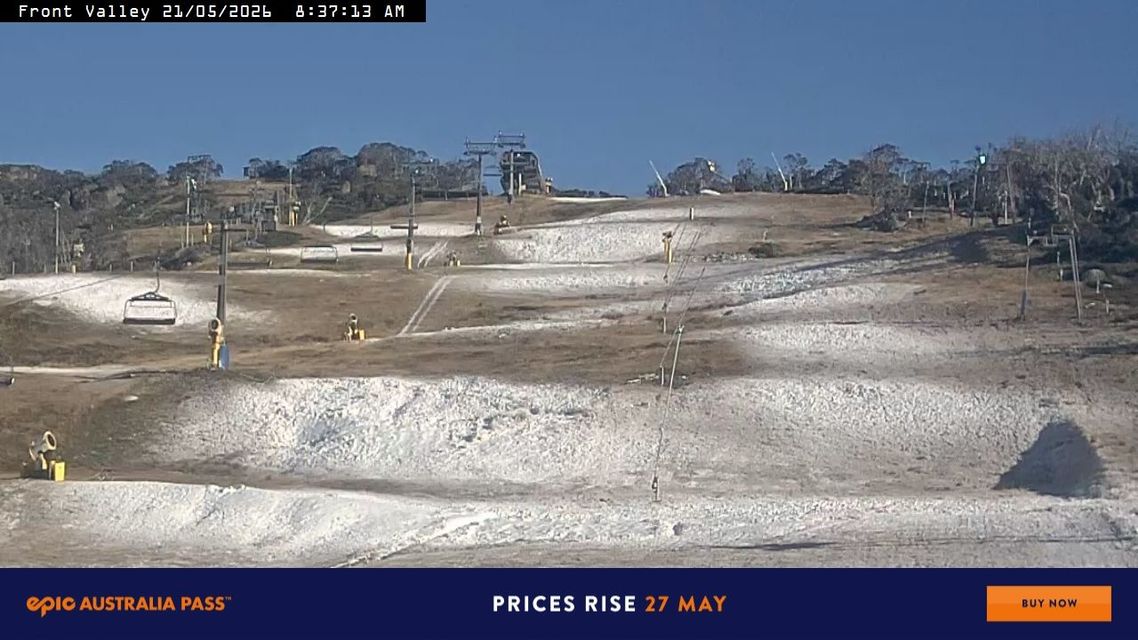
Image: Front Valley at Perisher after the first significant night of snowmaking for 2026. Source: perisher.com.au.
Compare the image above to Wednesday afternoon (below), when after a brief burst of snowmaking snow the previous night had melted, the slopes were completely grassy.
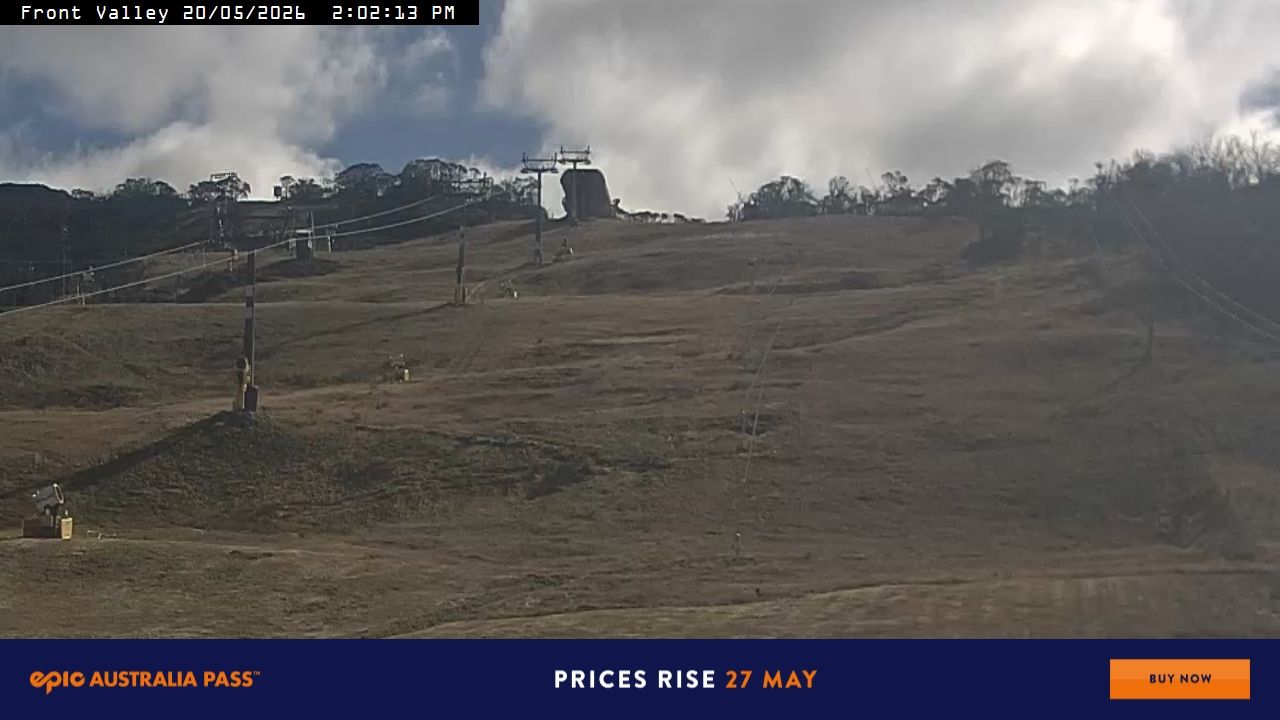
Image: Front Valley at Perisher before the first significant night of snowmaking for 2026. Source: perisher.com.au.
How does snowmaking work?
Snowmaking effectively mimics the way that nature works. It is sometimes called “artificial snowmaking” but in most cases, the term "artificial" is a misnomer.
That’s because snowmaking uses the same two ingredients required to make natural snow – air and water. The water is highly pressurised, while the air is compressed.
These two key ingredients are pumped out into the atmosphere alongside each other. The water droplets freeze and fall to the ground in a fine mist, landing on the air in a white blanket that forms a denser layer than natural snow.
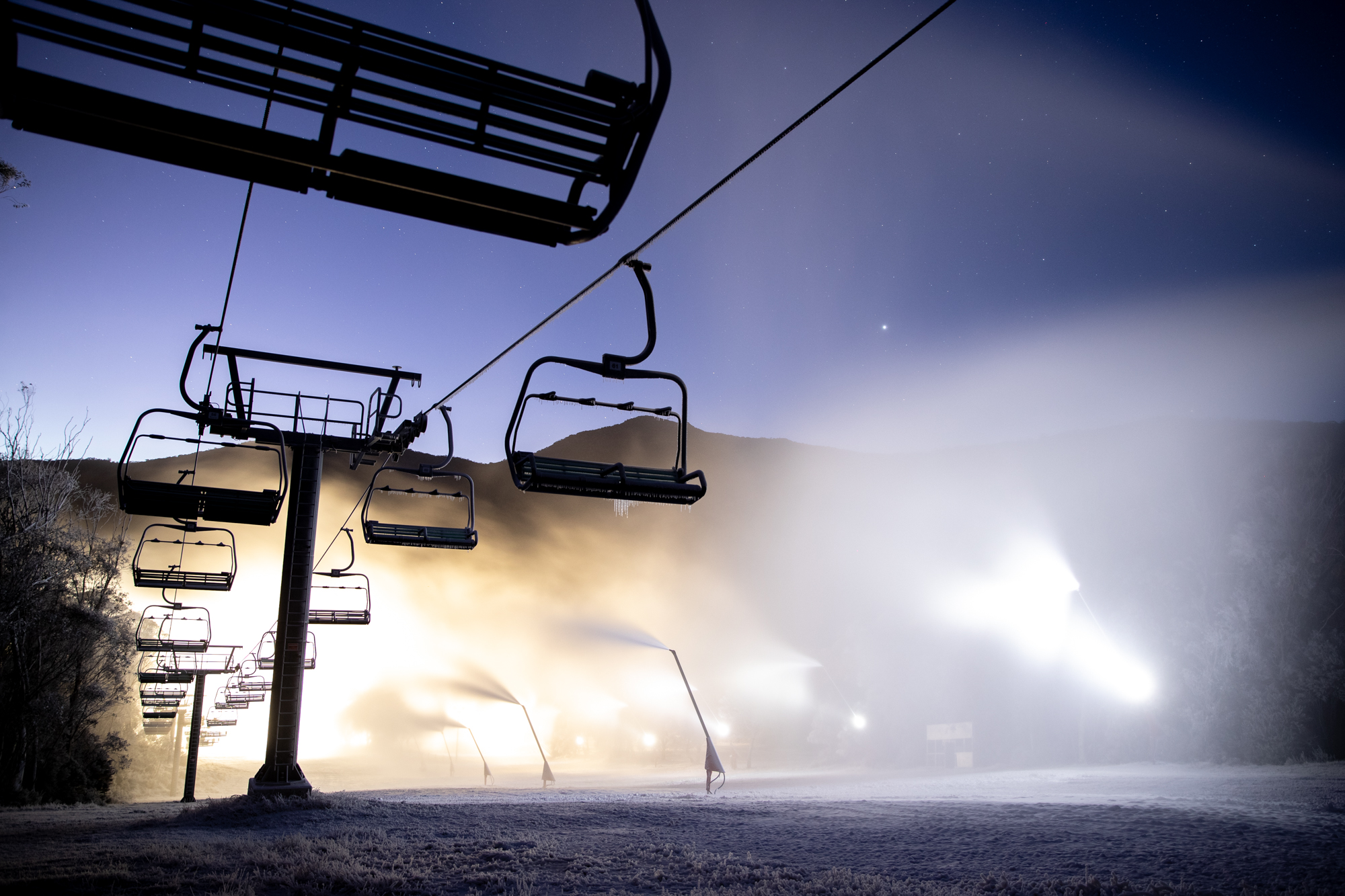
Image: Snowmaking at night on Thredbo’s Friday Flat beginner run. Source: Thredbo.com.au.
The reason the layer of snow is more dense is because snow created by snowmaking doesn’t fall as flakes, which form naturally high in the atmosphere and form a lighter blanket on the ground due to air trapped between the flakes.
When the mix of air and water is pumped into the air during the snowmaking process, the water freezes into tiny icy pellets rather than flakes. But the result is still much, much closer to “real” snow than ice.
In the early days of snowmaking, the process of firing and adjusting air/water mixture settings on the snow guns was all done manually. But that’s all more or less automatically handled inside the operations centre at each resort these days.
"Continual improvements and investment from Perisher on our snowmaking system over the last 20 years has resulted in us now having the majority of our snowmaking terrain covered with automated guns," Perisher’s Director of Mountain Operations Andrew Kennedy explains.
What conditions are required for snowmaking?
Obviously you need cold temperatures, although the equation is not quite that simple.
Humidity is also a key factor. Water evaporates more quickly in dry air, and the process of evaporation cools the surrounding air. This means that snowmaking can sometimes take place even if the air temperature is a degree or two above zero.
Conversely, it is often not possible to make snow at temperatures below zero when humidity is too high. That’s because the tiny droplets of water won’t evaporate and freeze if the air is saturated.
READ MORE: How do 'super' El Niño events affect the Australian snow season?
How much terrain can snowmaking cover?
Some smaller resorts worldwide which are geared for beginner and intermediate skiers and boarders can cover 100% of their terrain.
No Australian resort has that level of overall coverage, but Thredbo and Perisher have the top two largest snowmaking systems in the southern hemisphere. Both resorts can cover between about 10 and 20% of their total terrain with snowmaking
Mt Hotham in Victoria has 320 hectares of skiable terrain, with 38 hectares (or roughly 12%) covered by snowmaking. Along with Mt Buller (view their maps here), Hotham is one of just two major Australian ski resorts which clearly show snowmaking terrain on their trail map (below).
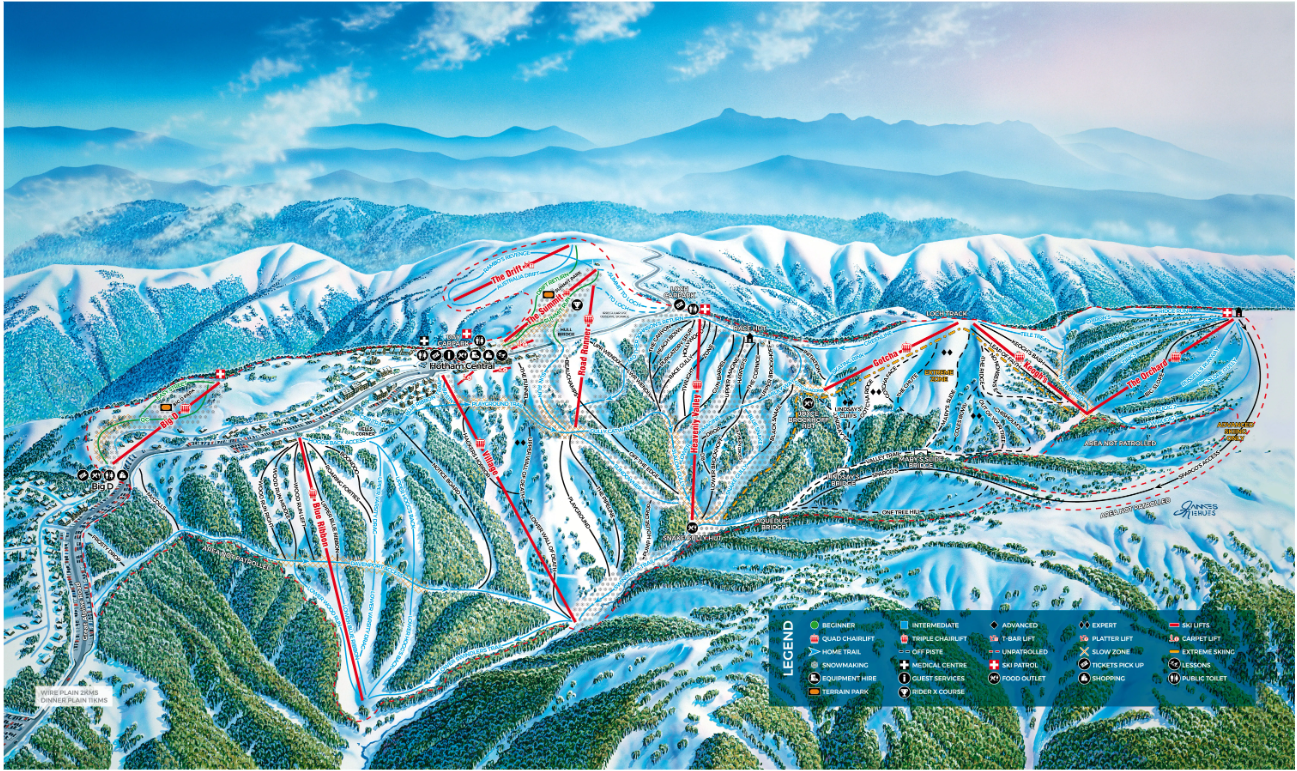
Image: The Mt Hotham trail map, with snowmaking terrain indicated by trails with an array of little snowflake icons. Source: Mthotham.com.au.
What are the chances of natural snow before the June 6 ski season opening?
At this stage, there are two windows for potential natural snowfalls.
The first is next week, when a low pressure system and cooler airmass moves over the southeast of the mainland.
There’s also a promising system on the long-range models around the start of June, which could push a series of snow-laden cold fronts towards the mountains just in time for the season opening. However, it’s too early to say much more about the latter system for now.