
Should they move the Sydney Test to avoid rain?
Yet another rainy day in Sydney has disrupted play on Day 3 of the New Year’s Test between Australia and South Africa at the Sydney Cricket Ground. But would changing the date of the Sydney Test to a different time in summer reduce the chance of wet weather?
Sydney is no stranger to rain and the past 12 months have been exceptionally wet, even by local standards.
The city’s official rain gauge at Observatory Hill received 2530 mm of rain in 2022, making it Sydney’s wettest year in records dating back to 1859. This easily beat the previous record of 2194 mm from 1950.
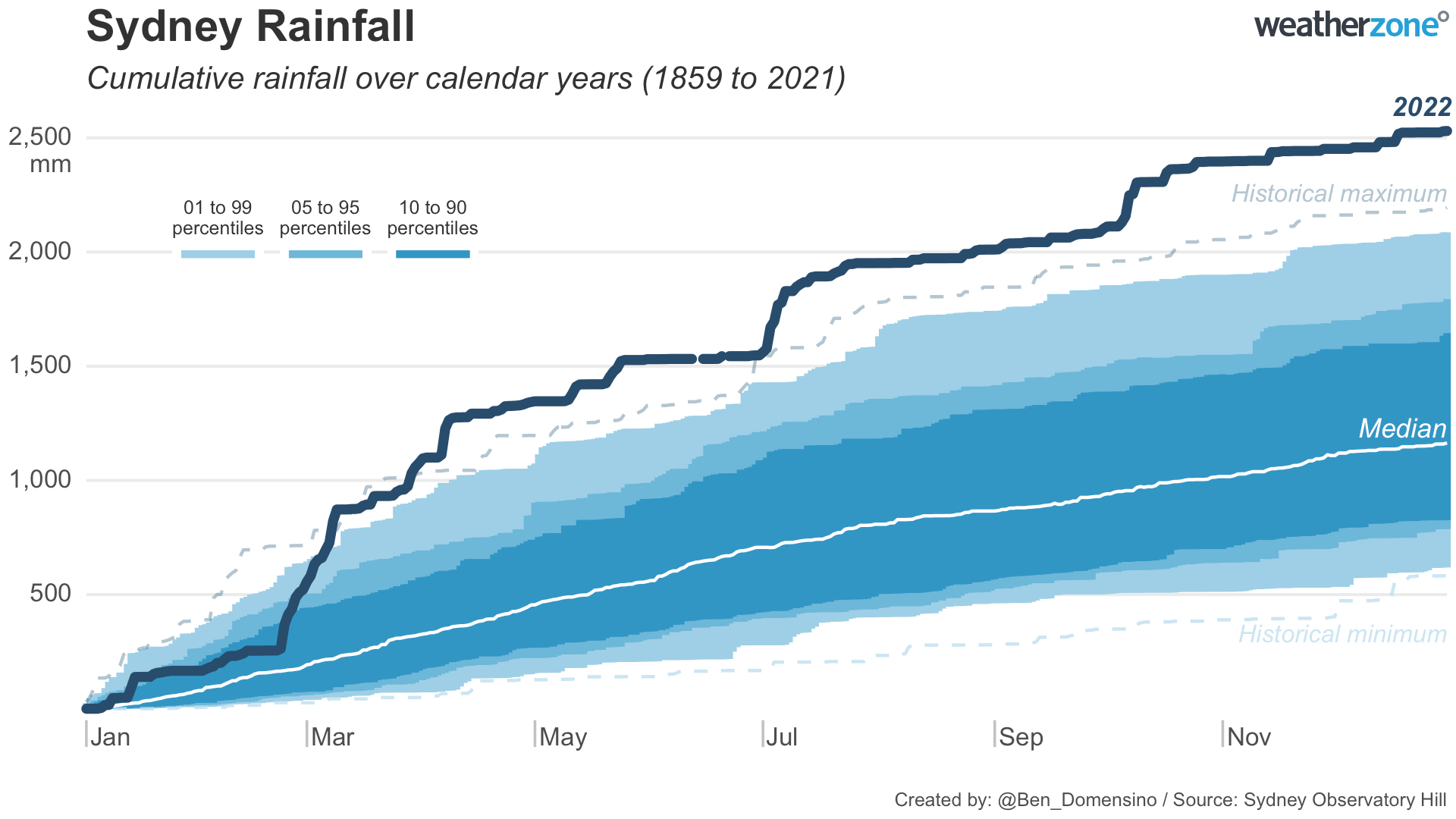
Sydney also registered rain on 199 days last year, which was the city’s third rainiest year on record based on rain days, beaten only by 205 days in 1891 and 212 days in 1893.
Unfortunately for cricket fans, 2023 has started out on a similarly wet note, with Sydney already amassing more than 40 mm in the first week of the year.
With rain now a notorious feature of the Sydney Test, it raises the question of whether there could be more suitable time in summer to hold the match.
The chart below shows the likelihood that there will be registerable rain in Sydney on each day of summer, based on all rainfall observations on record between 1858 and 2022.
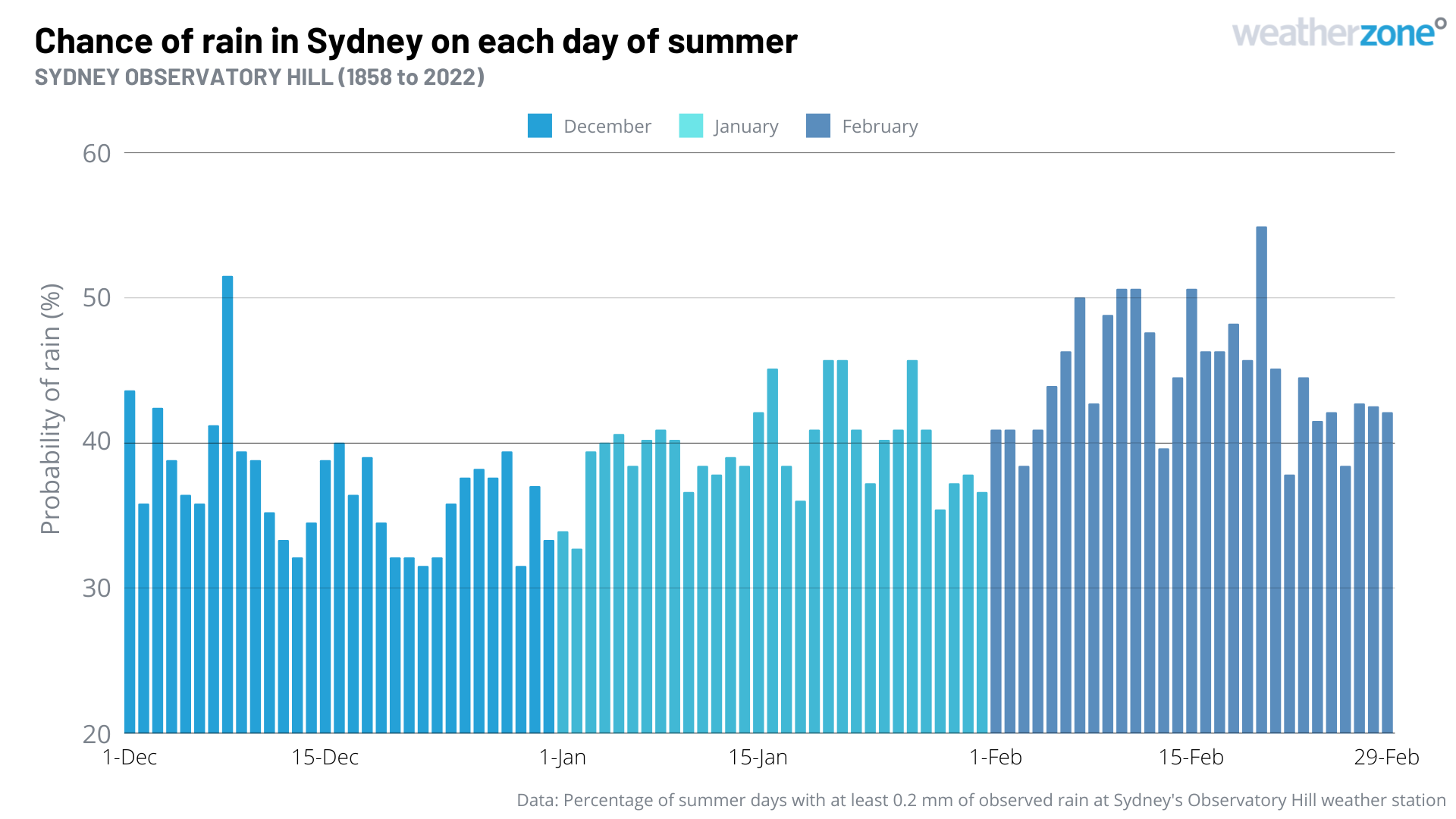
Image: Probability of rain in Sydney for each day of summer.
The most likely summer day to see rain in Sydney is February 20, which has a 54.9 percent chance of registerable rain during the 24 hours to 9am the following day.
The least likely day for rain in a Sydney summer is a tie between December 22 and 29, which both have a 31.5 percent chance of rain.
When looking at a rolling 5-day average throughout the season, the driest five-day stretch in Sydney’s summer is typically between December 19 and 23. By contrast, the 5-day spell that is most likely to see rain is from February 7 to 11.
Looking outside summer, Sydney is prone to rain at any time of year and averages between 10 and 14 days of rain in every month.
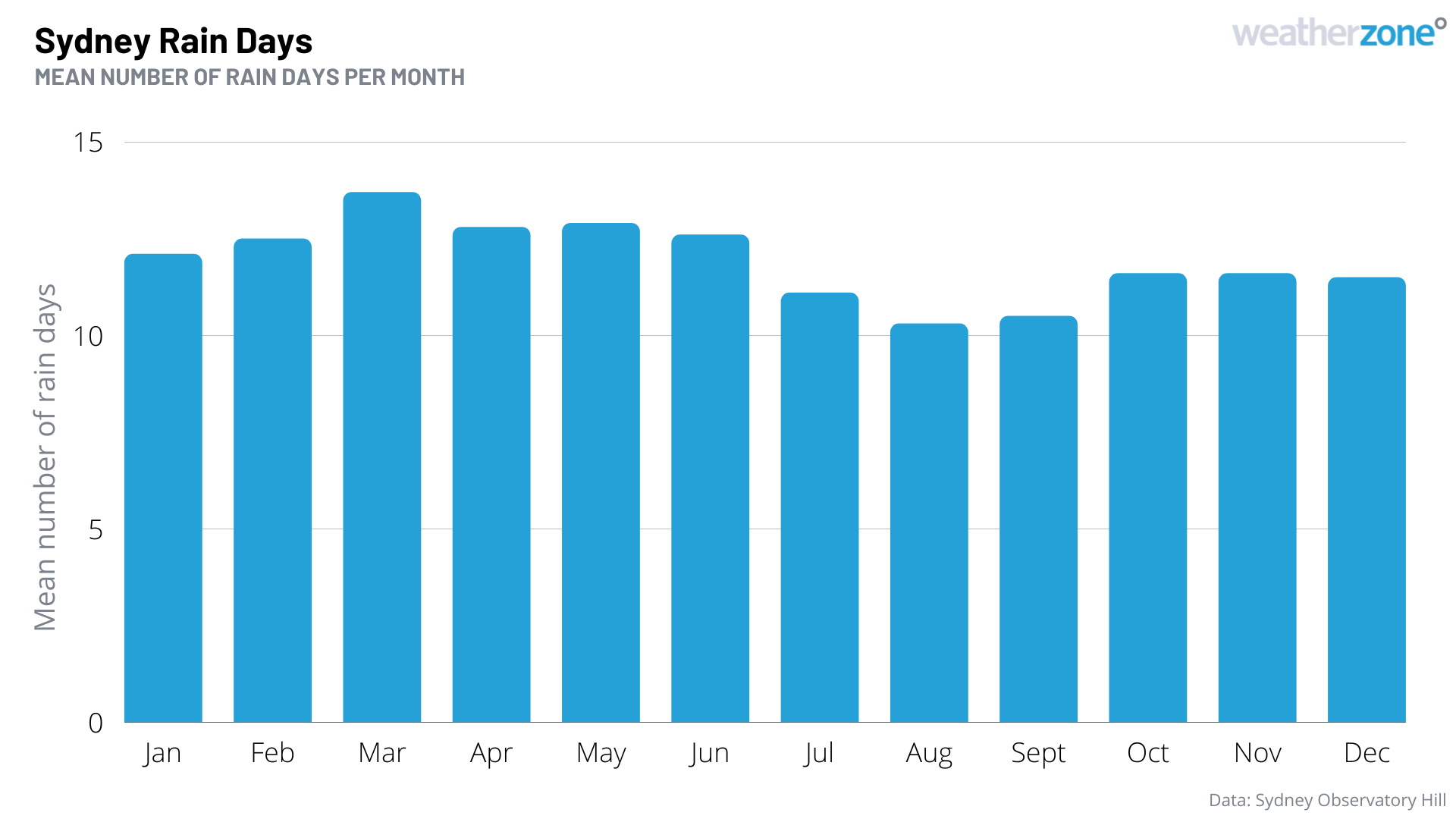
Image: Mean number of rain days in Sydney each month.
While there is some merit to considering a drier time in summer or late-spring for the Sydney Test, observations show that changing the date would not significantly increase the likelihood of dry weather.