
Heavy downpours to continue in QLD
As we wrote a few days ago here, copious rainfall is occurring across northern and central Queensland as an influx of abundant tropical moisture from the Coral Sea feeds into a trough.
Some locations across the central coast of the state have already beaten records during the last 24 hours, giving us a taste of what is to come over the next two days.
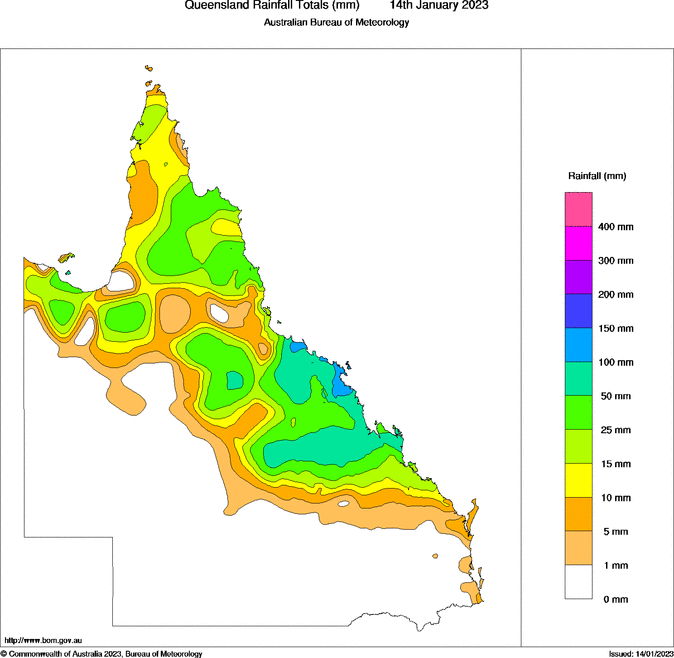
Accumulated rainfall to 9am AEST on Saturday 14th. Courtesy of the Bureau of Meteorology.
Let’s check some stats as a proof of the exceptional tropical moisture available in that region at the moment:
- Gargett 138mm (highest for the month of January in 9 years, and highest rainfall amount in 5.8 years).
- Mount Jukes received 161mm, which is the highest 24-hour rainfall for the month of January in 4 years, and the highest for any month in 2.9 years.
- Mirani Weir got 133mm, highest 24-hour rainfall for January in 9 years, and highest for any month in 2.9 years.
- Clermont Airport received 70.4mm (highest 24-hour rainfall for January in 11 years).
- Bingegang Weir 73.4mm (highest 24-hour rainfall for January in 10 years).
With the development of the monsoon trough during the last few days, rainfall has been persistent across northern QLD during this week. Some locations have beaten their average monthly rainfall for January. For example, in the last 3 days Mackay Airport and Mackay station have recorded 292.4mm and 284mm, respectively, the highest 3-day rainfall in 5.8 years for both locations, and surpassing their monthly averages for the current month (293.1 mm and 273.4mm, respectively).
Rainfall since 9am AEST for locations across the central coast and adjacent inland areas have reached around 30-70mm so far (to around 5pm AEST), with these records continuing to to be challenged for the remainder of today and for the next few days until Tuesday 17th. As we wrote in the previous stories, this trough may bring about widespread rainfall totals of ~150-300mm along the coast and adjacent inland areas between Tully and Rockhampton, with isolated totals potentially reaching ~500-600mm during this period.