
Great Lakes ice boosted by recent cold weather
The recent Arctic outbreaks and weeks of sub-freezing temperatures were not only responsible for frigid temperatures, snow and ice. They also caused a rapid increase in ice extent across the Great Lakes, which by February 8th were 53% cent covered, and just a few days later up to 58%.
Typically, freezing begins in December and peaks during late February and early March with about 50-55% of the Great Lakes’ surface covered with ice.
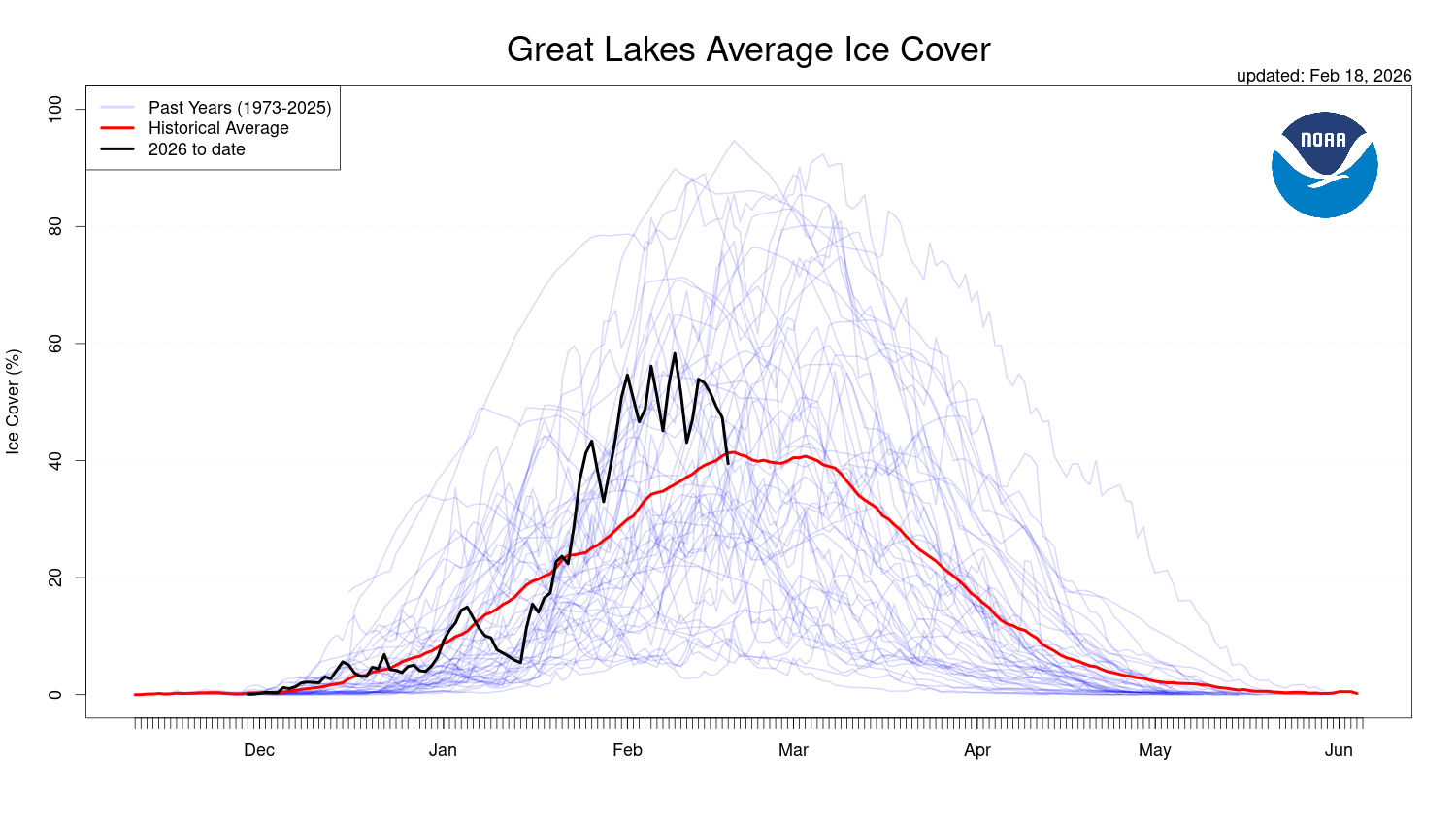
Image: Average ice cover across the Great Lakes compared with the historical average. Coverage was above normal in late January and early February, but far from record high levels. Source: NOAA
A Rapid Freeze Across Lake Erie
Lake Erie, being the shallowest of the Great Lakes, loses its reservoir of warmth most quickly, and it saw a particularly rapid and widespread surge of ice formation, reaching 95% coverage by February 8th. That’s up from below 2% as recently as January 14th, with a dizzying rise through the second half of January.
Recent influxes of milder air knocked a few percentage points off the total coverage, but such high ice extent in Lake Erie usually occurs later than this – mid to late February rather than early in the month.
Before the end of February there should be another shot of colder air across the Great Lakes, with another uptick in ice coverage possible before milder conditions return in early March.
The chances of Lake Erie reaching 100% coverage are low, and in modern records, it has rarely achieved full coverage. The most recent example was in 1996, and prior to that in 1979 and 1978.
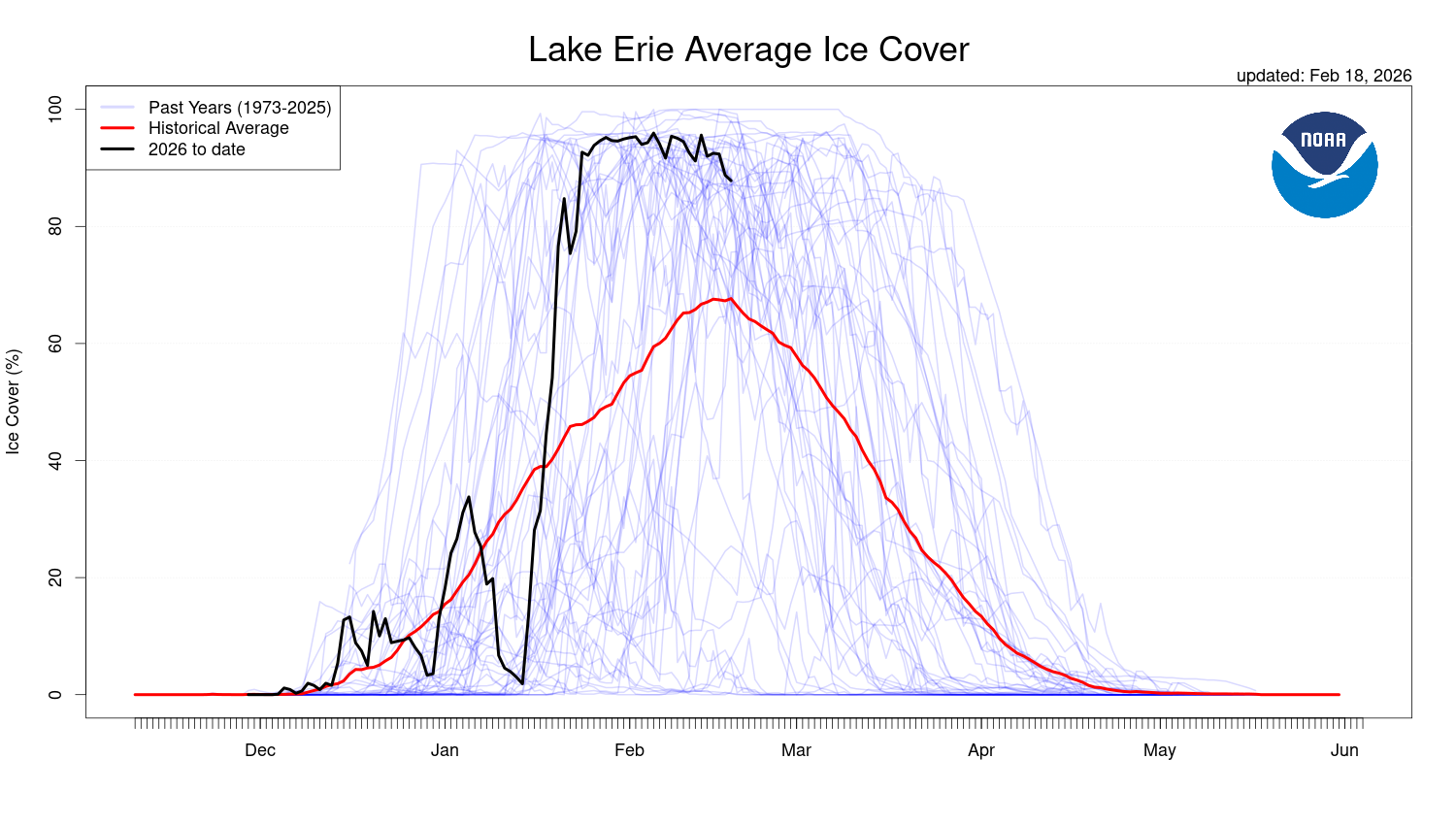
Image: Lake Erie ice coverage up to February 18 compared with the historical average. Source: NOAA.
Deep and Shallow Lakes
The deeper lakes, like Superior and Ontario, struggle to freeze as thoroughly because of their greater reservoir of relatively warm water. Comparing Lake Erie with Lake Ontario, despite being next door to each other, they have notable differences.
Lake Ontario has an average depth of 283 feet, with its lowest point close to 800 feet deep. Lake Erie, on the other hand, averages just 62 feet, and thus lacks the same store of warmer water at depth. Water has a high heat capacity, absorbing energy through the summer and slowly releasing it during the winter. Even during frigid winter outbreaks, and despite the surface cooling, mixing constantly brings slightly warmer water to the surface as storm systems move across, churning up the lake. This prevents a stable surface cold layer developing.
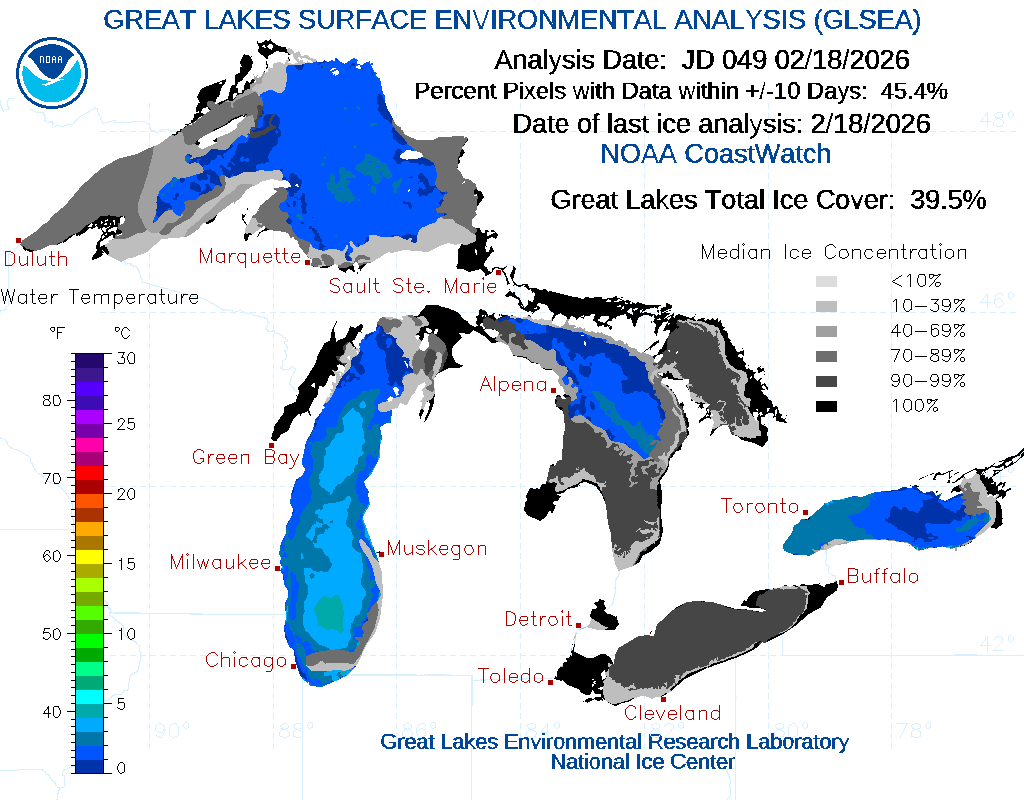
Image: Great Lakes Ice coverage on February 18. Source: GLSEA.
Impacts of frozen lakes
There are pros and cons to the lakes freezing. On the plus side, the presence of ice reduces shoreline erosion and damage from winter storms, and protects fish habitats. It also greatly reduces evaporation, preserving lake levels, which may be important if a warm and dry summer or fall has led to evaporative losses.
On the other hand, ice jams can occur and lead to heightened flooding risks, while cargo movement may be delayed, the shipping season can be shortened, and ice breakers may be needed to open shipping channels.
Another significant impact is a reduction in lake effect snow, which develops when cold air passes over the relative warmth of the lakes’ water, picking up moisture and atmospheric instability, and dumping often heavy bands of snow downwind. As Lake Erie has frozen over, these sources have been cut off.