
Autumn chill as huge cloudband sweeps offshore
Take a look at that massive cloudband which has largely moved out into the Tasman Sea.
That's the tail-end of the weather system which has brought handy falls of rain to parts of eastern Australia in recent days, as outlined in our story on Wednesday.
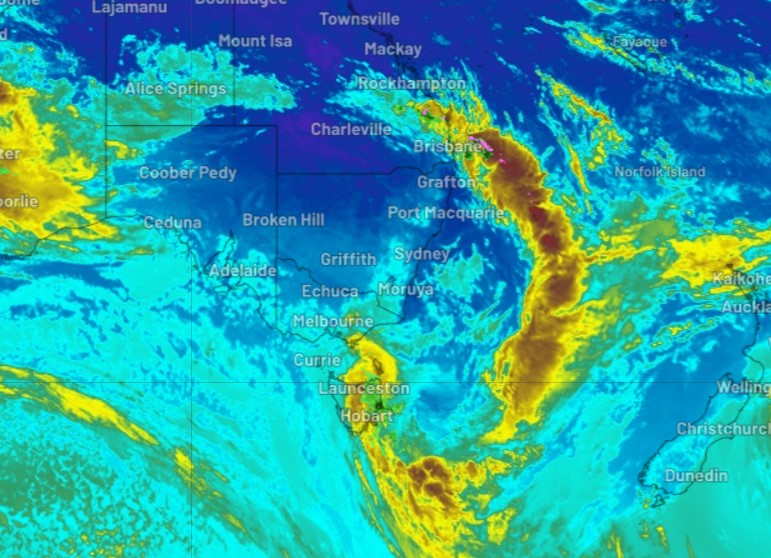
In that story, we mentioned how rain had fallen in every single forecast district of NSW, Vic and Tas in a 24-hour period to 9 am Wednesday.
In the ensuing 24 hours, it was southern Queensland's turn. Early Thursday morning storms dumped around 15 mm on Brisbane, while heavier rain fell west of the city throughout Wednesday, with almost 100 mm falling in parts of the Darling Downs.
While the northern part of the cloudband and trough may continue to cause thunderstorms that may become severe in the afternoon for parts of eastern Qld (from southeast Qld to about Mackay), the system has now mostly tracked offshore as mentioned.
While there's not a huge amount of cold air in the wake of the cold front and associated trough, there's just enough to provide a hint of autumn chill in many areas.
- Temps dropped close to freezing in the high country of NSW, Victoria, and Tasmania overnight, and subzero temperatures can be expected into the weekend as conditions slowly moderate.
- Even coastal areas felt a chill on Thursday morning. Sydney's low of 15.6°C was hardly what most people would call "cold", but it was the coolest minimum of autumn 2023 to date, and locals could definitely feel the seasonal change this morning.
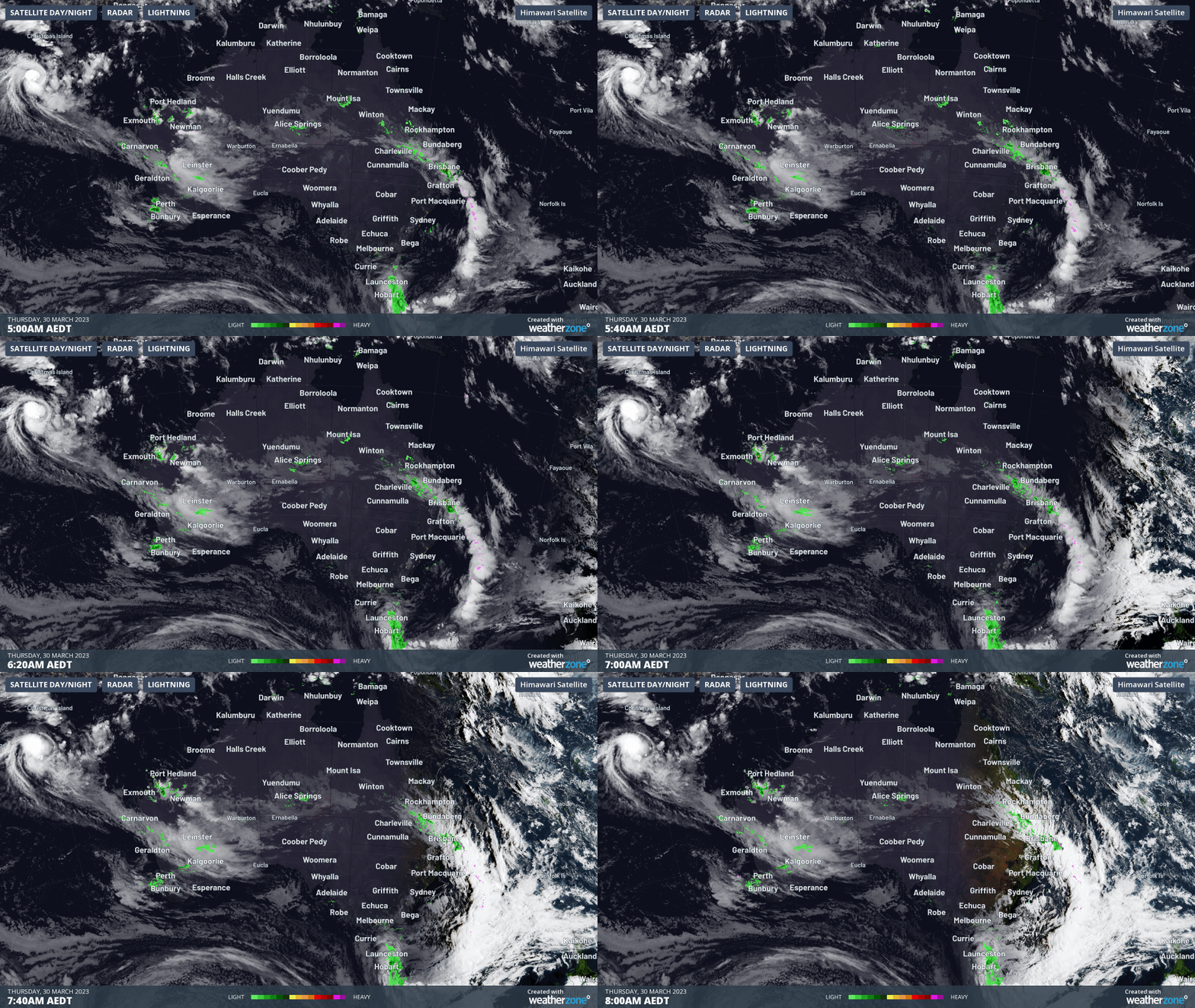
With the bulk of the cloudband now out to sea, most of eastern Australia should remain dry for the rest of Thursday, with the exception of Victoria’s southern coastline, which should see intermittent showers.
The wettest spot in the country looks to be Tasmania, and especially the northeast of the state, as the nearby low in the Tasman Sea pushes moisture onshore. You can see how it's all part of the same weather system in the loop above.
The low has also caused wild winds in Tasmania and eastern Victoria, with gusts of up to 100 km/h.