
45C in four Australian states next week
An extremely hot air mass will spread across Australia next week, with temperatures expected to reach the mid-to-high 40s in parts of four states.
Next week’s heat will be driven by a slow-moving upper-level ridge passing over Australia, which will allow a broad ‘heat trough’ to develop at the surface. This weather pattern will cause hot air to intensify over WA from this weekend before spreading across southern, central and southeastern Australia next week.
Temperatures will climb across WA during the next few days, with a large area of the state expected to reach the low to mid-forties by Monday. The maps below show modelled maximum temperatures on Friday this week and for this coming Monday, highlighting how much warming will occur in WA over the coming days.

Image: Forecast maximum temperature on Friday, January 2, 2025. Source: Weatherzone.
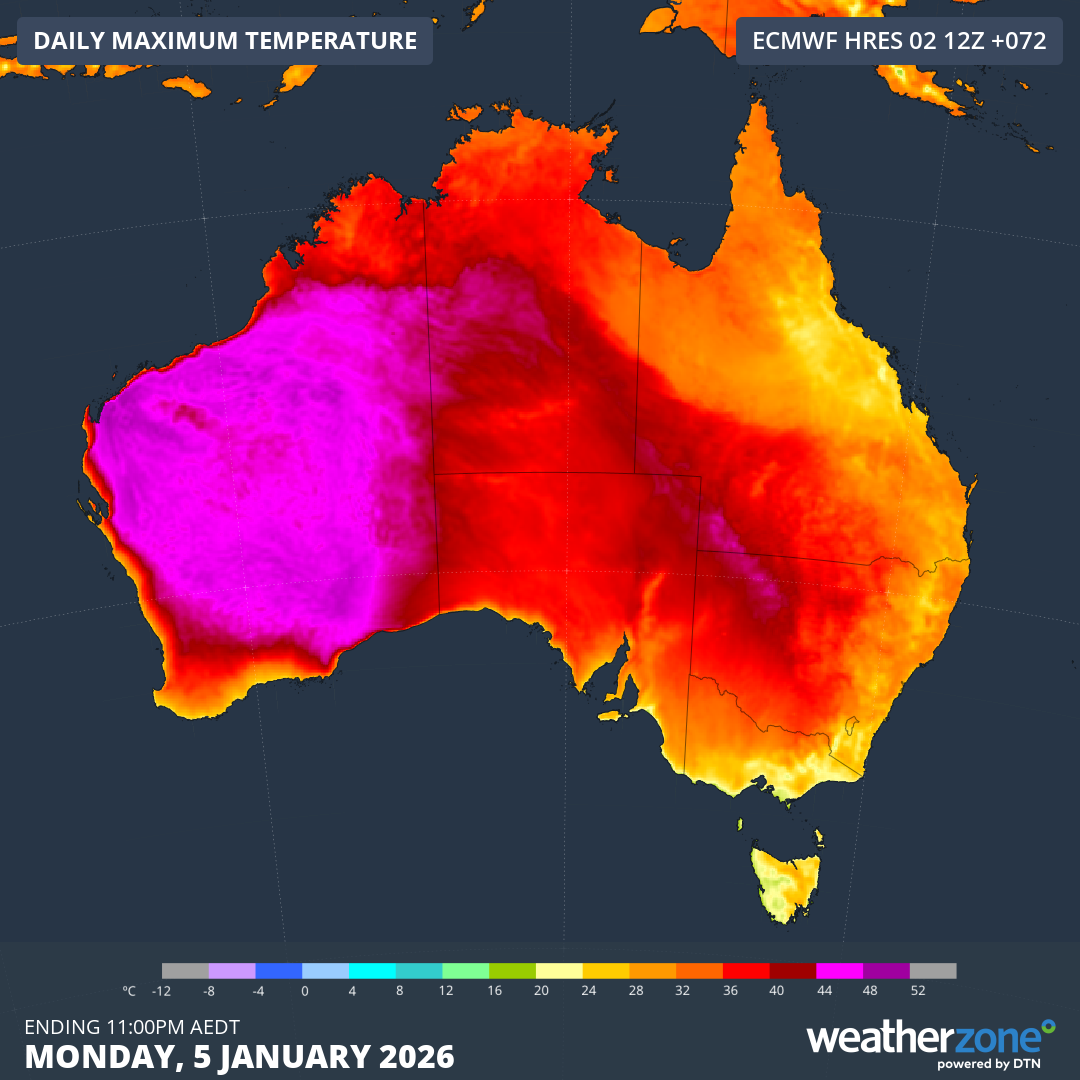
Image: Forecast maximum temperature on Monday, January 5, 2025. Source: Weatherzone.
The heat should start to spread further east from around Tuesday next week, initially into SA and central Australia before also hitting Vic and NSW from Wednesday and Thursday.
It’s too early to know exactly how hot this air mass will be as it spreads across Australia next week. However, numerous computer models suggest temperatures could reach around 45 to 46°C in parts of WA, SA, Vic and NSW, with some spots possibly reaching about 48°C.
The hottest weather over the coming week will occur inland, away from Australia’s state capital cities, but the major cities won’t completely escape the heat.
Adelaide is forecast to reach around 39 to 41°C on Wednesday and Friday next week. Melbourne is also predicted to reach 30 to 39°C each day from Wednesday to Friday next week.
Mildura in northwest Vic will be exposed to the searing inland heat from Wednesday and is forecast to reach 45°C on Thursday. Slightly higher temperatures could occur across the border in SA on Thursday.

Image: Daily forecast in the Weatherzone app for Mildura, Vic next week. Source: Weatherzone.
The slow-moving nature and intensity of this heat will cause Severe heatwave conditions to extend from WA across to Vic and Tas next week. While the highest temperatures will occur in WA, SA, Vic and Tas, heatwave conditions will impact part of every Australian state and territory.
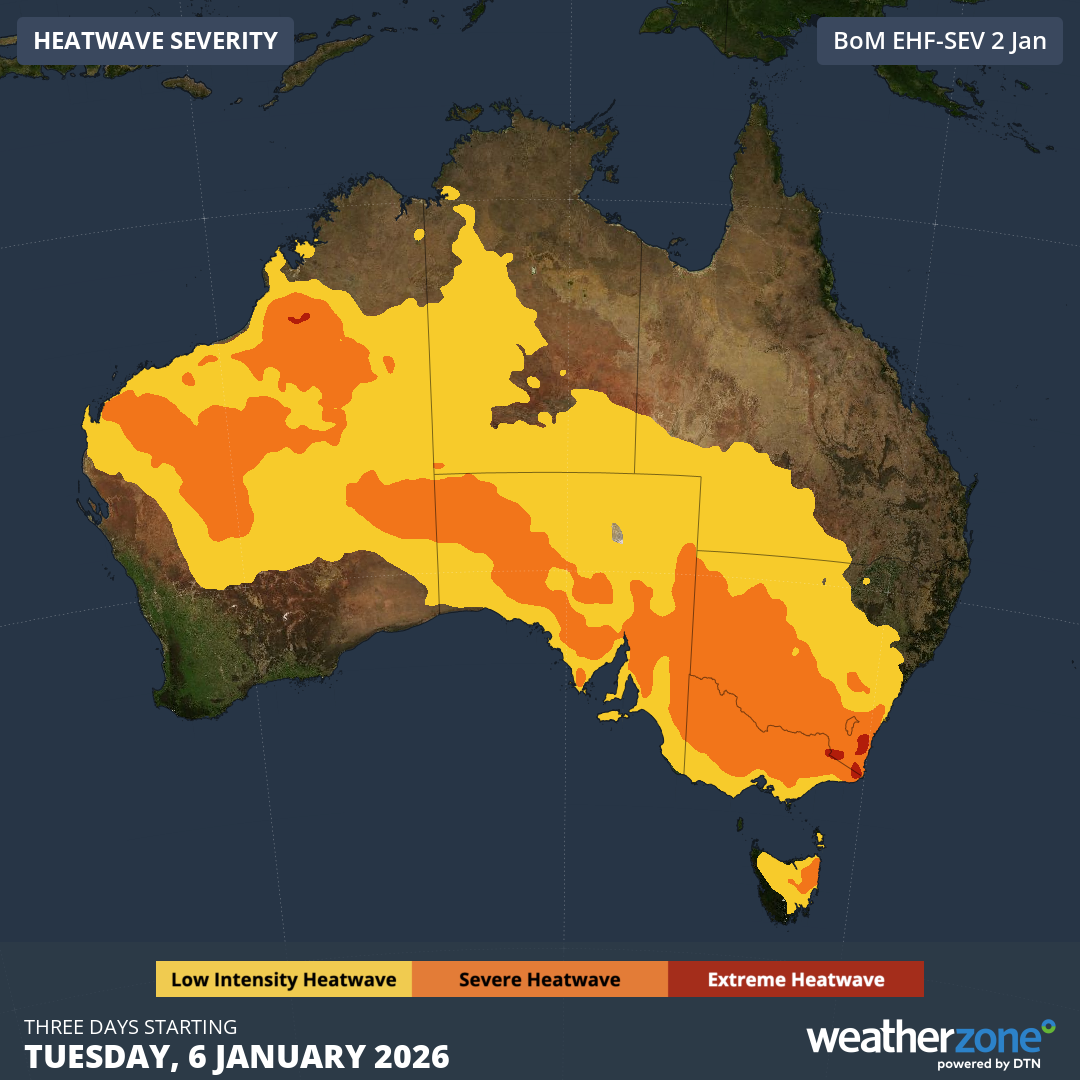
Image: Forecast heatwave severity for the three days starting on Tuesday, January 6, 2025. Source: Weatherzone.
The high temperatures are also likely to elevate fire danger ratings on some days next week, with Friday currently looking like a potentially dangerous fire day for parts of southern Australia.
Forecasts may jump around over the next few days as new model guidance becomes available, so be sure to check the latest forecasts in your area, particularly if you have outdoor plans.
The Australian Red Cross has the following advice for staying safe during a heatwave:
- Stay inside and keep out of the heat as much as possible. Plan to do most of your activities early or late in the day to avoid being outside during the hottest hours.
- Avoid sport and heavy exercise during peak hours of the day.
- Drink plenty of fluids to stay hydrated, even if you don’t feel thirsty.
- Keep your home cool by using external shade cloths or blinds to shield the inside of the house from direct sunlight.
- Where possible use a combination of air conditioning and fans to keep certain rooms in the house cool. Electric fans can be an effective method of cooling if air conditioning is not available.
- If not using air conditioning, open windows during the cooler parts of the day and allow ventilation between rooms.
- Have cool showers or baths, splash yourself with cold water, or use a cool damp cloth to cool down.
- If it's too hot at home, go to an air-conditioned shopping centre, community centre, library or your local swimming pool.
- Avoid direct exposure to the sun where possible and protect yourself with appropriate clothing (loose-fitting, lightweight and light-coloured).
- Do not leave children or animals in parked vehicles.
- Keep in touch with friends, neighbours and relatives, particularly if they’re unwell or isolated.