
The ghostly snowy aftermath of Colorado's tragic wildfires
As Australians enjoyed warm summer weather over the Christmas and New Year's period, parts of Boulder County in the US state of Colorado burned – in the heart of their winter.
As many as 1000 homes were destroyed by flames which started as grass fires, in a state which is usually associated with snow and skiing at this time of year. Tens of thousands of people were evacuated and tragically, two people remain missing, presumed dead.
And then a winter snowfall on New Year's Eve changed everything, extinguishing the fires, and coating the charred landscape in a ghostly white blanket.
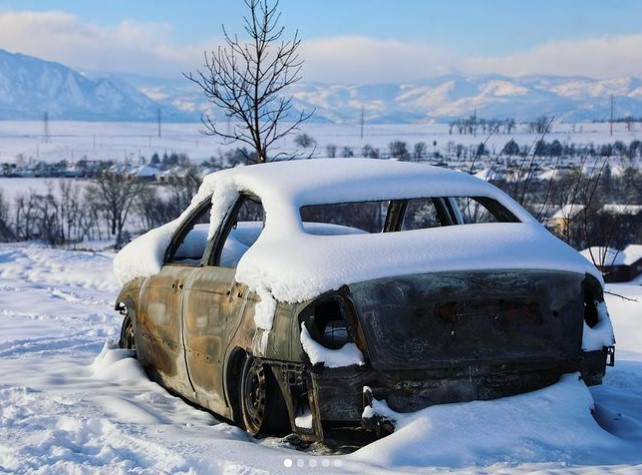
Image: From burn-out to white-out. Source: @adamstielstra via Instagram with a special shout-out to @stevekilbey and @kilbeykennedy.
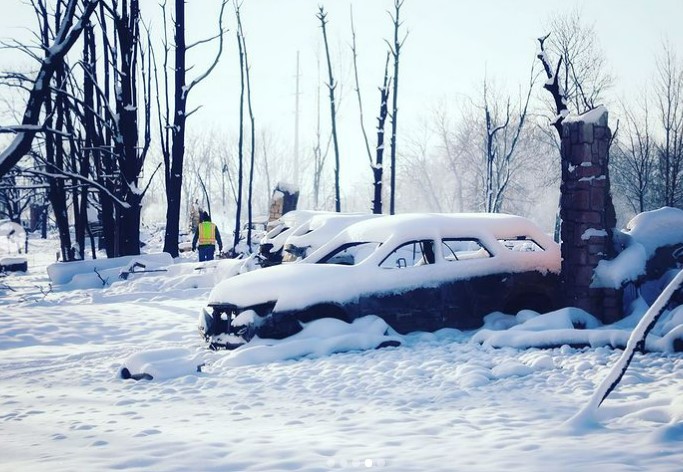
Image: Nothing could escape the fire's fury. Source: @adamstielstra via Instagram with a special shout-out to @stevekilbey and @kilbeykennedy.
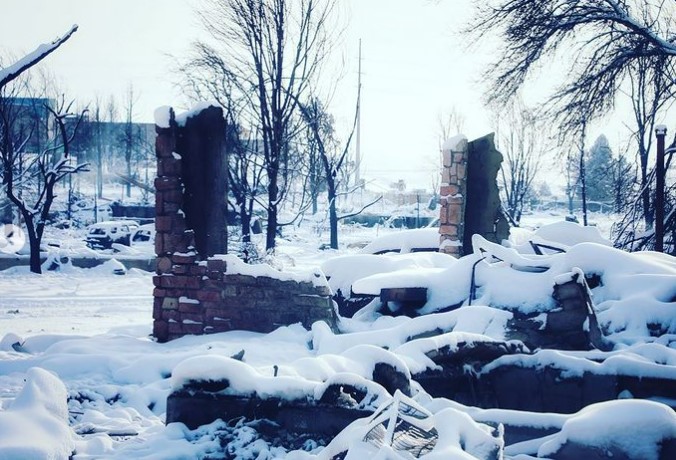
Image: Devastating scenes familiar to every Australian - except for the snow. Source: @adamstielstra via Instagram with a special shout-out to @stevekilbey and @kilbeykennedy.
Colorado, like areas in and around Australia's mountains, does of course experience wildfires. But they usually come in summer and autumn.
Boulder County sits on the eastern flank of the Rocky Mountains. It's shielded from the wettest, snowiest parts of the Rockies so fires are a pretty regular occurrence.
Even so, Boulder County had been desperately dry by local standards in the period between August and December 2021.
- The county recorded 20.68 inches (525 mm) of precipitation overall in 2021 (data via NOAA).
- That's close to its annual average of 21.16 inches (537 mm), which for the record, is pretty close to the annual average rainfall of Adelaide here in Australia.
- But most of that rain fell early in the year, which is why the annual statistics don't paint the full picture in this case.
- In the five months between the start of August and the end of December, Boulder County recorded just 1.86 inches, or 47.2 mm. That would classify as a severe deficiency virtually anywhere, including many of the driest parts of Australia.
Fanned by winds that reportedly reached in excess of 160 km/h, the flames crossed from tinder dry countryside into urban areas just northwest of the state capital of Denver.
Apocalyptic views of the #MarshallFire in Louisville, Colorado. Mind boggling what has happened today. #COwx pic.twitter.com/D4RRdhMXGU
— US StormWatch (@US_Stormwatch) December 31, 2021
A mountain wave effect (formed by strong winds blowing across a mountain range, as visible in the tweet below), was also partially responsible for amplifying the wind strength.
Denver7 viewer Mario Gori shared this timelapse of the MOUNTAIN WAVE helping to fan the flames of the #MarshallFire. This phenomena is like waves crashing on a beach, feeding the fire like bellows! @denverchannel @NWSBoulder #cowx @ClimateCentral @WeatherGeeks pic.twitter.com/aMjVWQApat
— Mike Nelson (@MikeNelson247) December 31, 2021
Meanwhile in Australia, a second straight La Niña summer has thus far meant a relatively quiet bushfire season. Here's hoping it stays that way.